

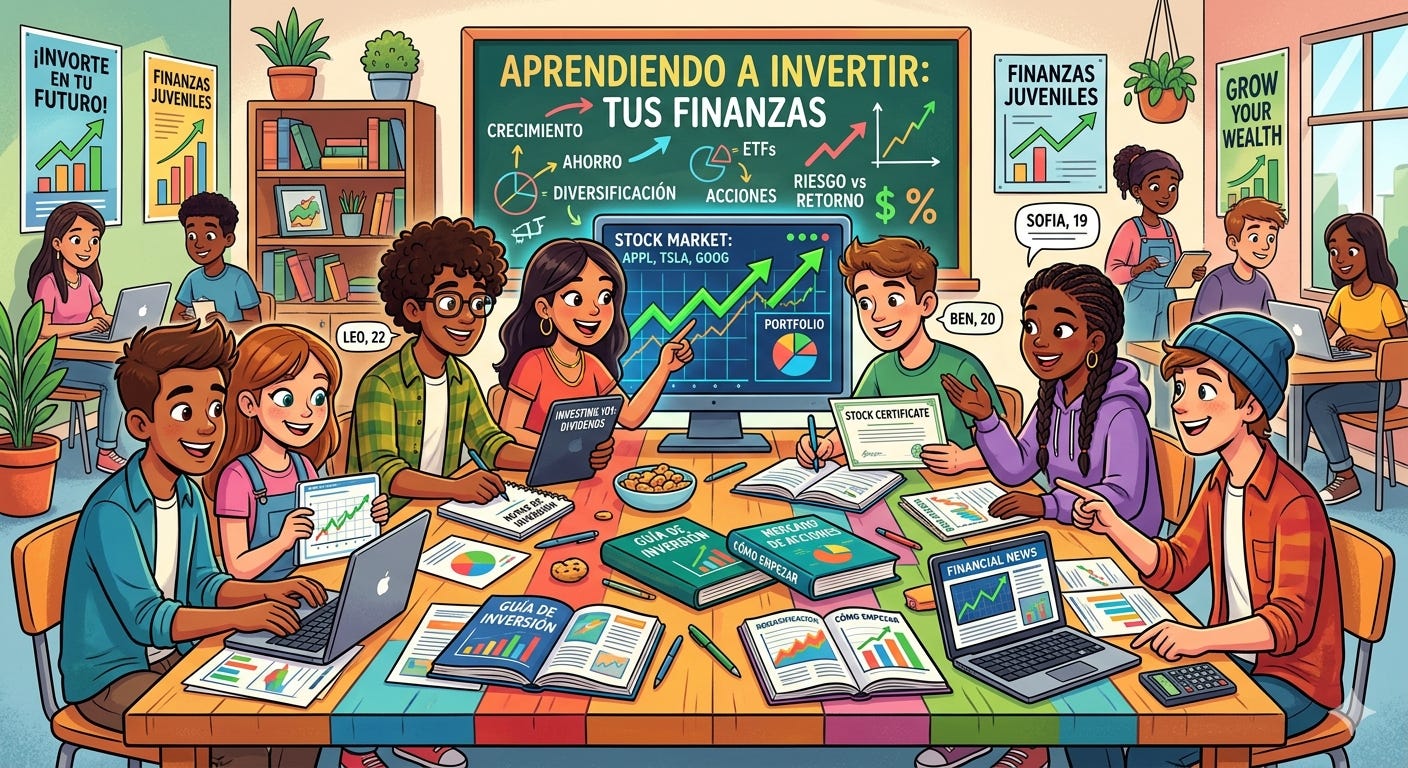
From the Piggy Bank to Your First Contract With Time
In anthropology we know all too well that some objects aren’t objects at all — they’re time portals. Cultural interfaces that connect us to an earlier version of ourselves, to cosmogonies and to passages of history that hand us back a whole set of imaginaries. For me, one of those portals is the old metal coin bank from the bygone Caja Social — a little metal chest that looked like a tiny portable vault, absurdly heavy for a child, with that dry, almost ceremonial clink every time a coin dropped inside. And the interesting part is that the “chink” wasn’t just metal hitting metal. It was a promise, a primitive way of understanding the future.
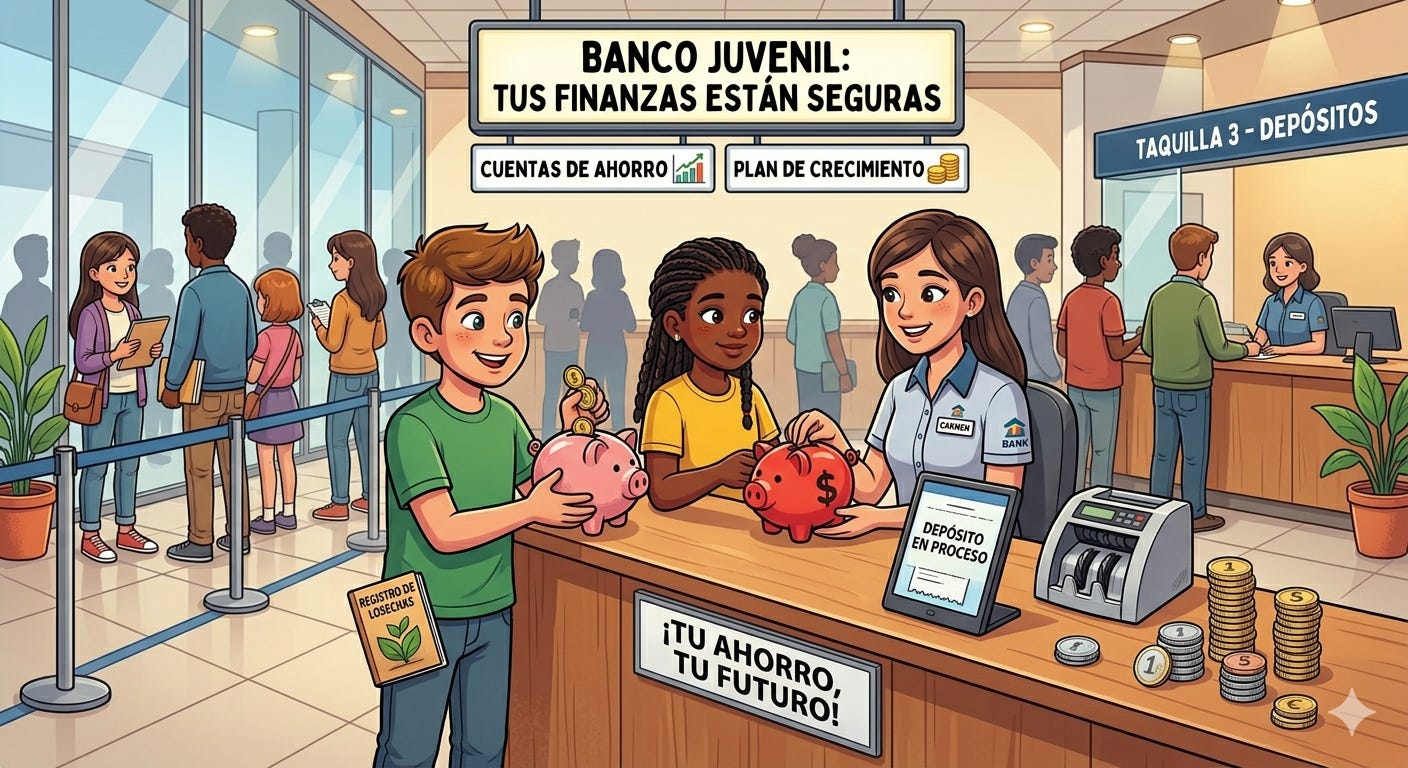
I’m certain many of you reading this know exactly what I mean. When I was just a kid, my mother gave me my first piggy bank, a steel coin bank where I stashed the “change” I got for running errands for her and my aunts and uncles. At home, every one of my siblings had one. It wasn’t optional — it was part of the family ritual, the way our parents drilled into us early on an idea that seemed unquestionable at the time: you had to save for the future.
That was our first contract with time. So I went from the little chest to the red house, and from there to the ceramic piggy. Coin after coin, I built up my savings — though I have to confess the discipline was never constant; plenty of times I dodged saving to treat myself to a few indulgences. In the end, what mattered was building the habit, because from the coin bank we leapt to the first bank account, and from there to the term deposit (yes, I had one of those too). The savings passbook and the term deposit weren’t just the financial instruments of the era — they were the symbol of discipline, foresight, and preparation for the uncertain. The mantra was clear: you had to work, earn money, put it away, and wait for something to come along to spend it on.
But as the years went by, that map stopped being enough — and eventually became almost irrelevant.
When Saving Stops Being Enough
A couple of days ago, a good friend asked me a seemingly simple question: how do we teach our kids to save? As tends to happen at FUTOPIX, the question didn’t stay on the surface. It threw me straight back to that metallic past, to the dry sound of coins dropping into a bank — but it also forced me to confront something deeper: the suspicion that the very ritual we inherited no longer does the job we think it does. My answer caught him off guard, because it wasn’t the one he expected.
I told him that today it’s no longer important to teach our kids to save. Not because saving was a mistake, but because it was the right answer to a system that no longer exists. It was a tool designed for an environment where money was relatively stable, where time worked in favor of whoever hoarded it, and where discipline was enough to preserve value. The world stopped running on those rules.
What our kids really need isn’t to learn how to store money, but to understand how it behaves. They need to learn to position it, to read its flows, to spot where it expands and where it erodes. They need to learn to invest — not as some financial sophistication, but as a basic capacity for inhabiting the economic system that is already emerging.
This is where the real generational tension shows up. While many parents still think about teaching their kids to protect value, the system has already evolved into one where value only survives if it moves. We’re moving from a world where money was a static object, toward a world where money is a programmable system. It’s in that transition where everything gets more complicated, because the map we inherited stops matching the territory our kids are facing.
Saving, as we’ve traditionally understood it, rested on an implicit premise: that money could hold up over time without significantly deteriorating. Today that premise no longer holds. Inflation acts as a silent, constant, almost imperceptible erosion that wears down the value of money sitting still. But beyond inflation, there’s an even deeper dynamic: capital that moves, that participates, that plugs into growth systems is being rewarded out of all proportion compared to capital that stays static.
In other words, money stopped being a deposit and became a flow. When something is a flow, you can’t understand it through the logic of passive accumulation. You have to understand it through the logic of circulation, of speed, of strategic positioning. Saving meant containing, stopping, preserving. Investing means releasing, exposing, letting money interact with systems that grow it under certain conditions.
That’s where the discomfort begins for a lot of people. Because teaching kids to save was simple — it was a moral narrative: discipline, patience, sacrifice. Teaching them to invest, on the other hand, means accepting uncertainty, talking about risk, admitting that not everything is controllable. It means stepping onto terrain where even we are still learning. But dodging that conversation doesn’t protect our kids — it just leaves them without tools to operate in the new economic system.
Because they aren’t going to live in a world where money waits. They’re going to live in a world where money moves, gets programmed, gets optimized, gets redistributed in real time. A world where stillness isn’t prudence, it’s loss; where staying on the sidelines isn’t neutral, it’s a handicap.
Here comes the idea that’s hardest to accept but that we most need to internalize: saving, as we’ve historically understood it, has stopped being a value-preservation strategy and has become a slow form of losing it. Saving is the easiest way to make yourself poor.
This isn’t a tweak. It isn’t an incremental recommendation. It isn’t that we should save a little less and invest a little more. We’re facing a paradigm substitution.
We’ve gone from teaching kids to resist time to teaching them to amplify it; from teaching them to hoard to teaching them to move within complex systems — and that transition isn’t optional. It’s the difference between taking part in the economy that’s coming… or staying trapped in the one that already ceased to exist.
From Object to Intelligent System
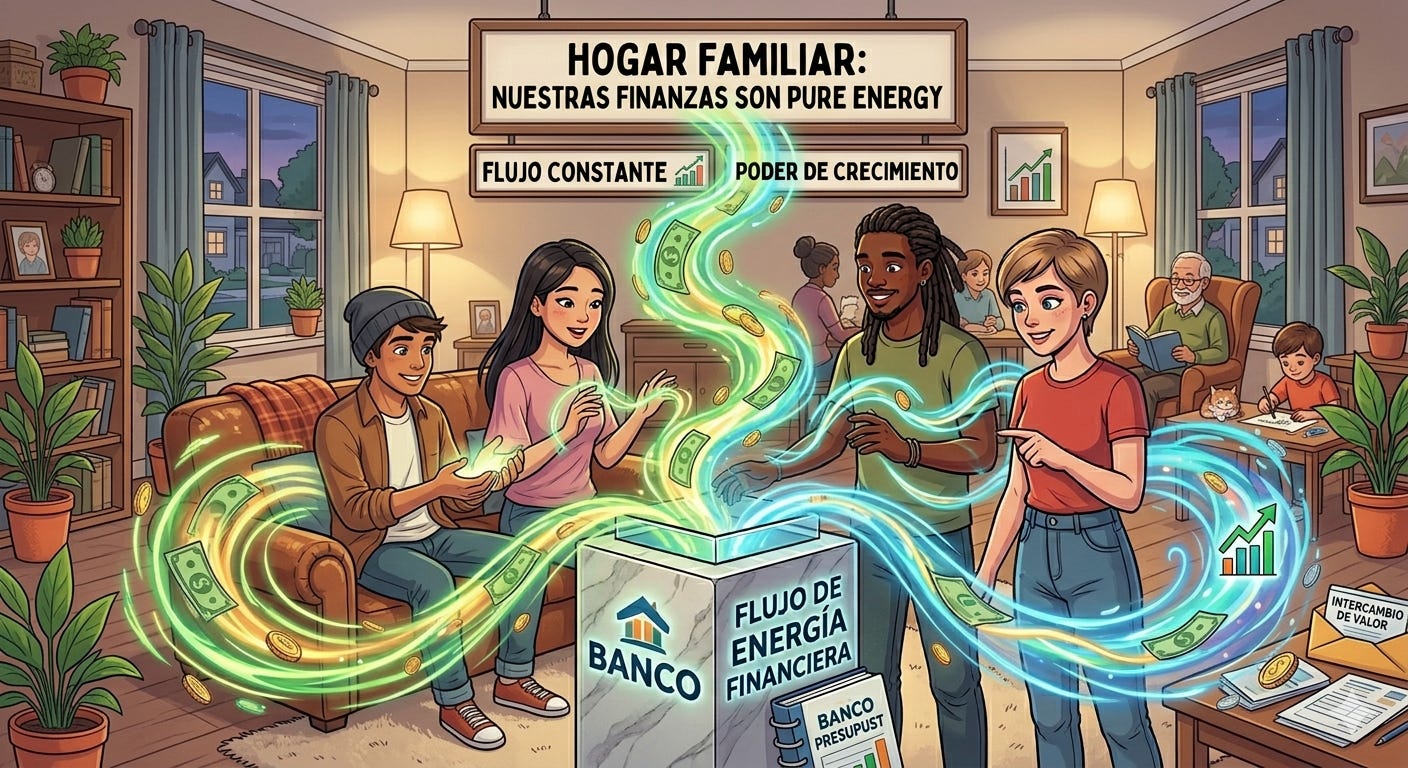
Money has never been static, but what we’re seeing today isn’t just one more incremental co-evolution — it’s a change at the root. Money has stopped being a store of value and is becoming an intelligent, programmable, ontological system. This isn’t a cosmetic change; it’s a change in its very nature.
Before, money was something you stored, transferred, or spent. Today, money is starting to behave, to execute instructions, to interact with other systems without necessarily a person making each decision.
To grasp the scale of this shift, think about something simple. When you deposited money in a bank account, that money sat there, waiting for you to decide what to do with it. It was passive. It depended entirely on your action. In the new environment, by contrast, money can be programmed to act under certain conditions. This is where smart contracts come in. They’re nothing more than coded agreements that execute automatically when something happens. It’s money that stops waiting and starts operating.
Imagine, for example, that you have a rental agreement. In the traditional world, the tenant has to remember to pay, the landlord has to verify the payment, and if something breaks down, a chain of friction begins: calls, delays, conflicts. In a system based on smart contracts, the money is released automatically on the agreed day, provided the conditions are met. If they aren’t, the system acts accordingly. No interpretation, no intermediary. The money executes the agreement all by itself.
Another example even closer to home: many of us had relatives who gave us company shares — certificates we hoarded as if they were Morgan’s treasure. For that to work in the traditional model, someone had to monitor the market, make decisions, buy or sell those securities. In the new model, that portfolio can be managed by automated rules or even by AI, which reallocates capital based on predefined market conditions. If an asset falls below a certain threshold, the system reacts. If another climbs, the system reassigns. The money isn’t just invested — it’s thinking in operational terms.
This is where a gap opens up that we can’t ignore. If we, as parents, are still trying to understand what it means for money to behave this way, how do we prepare our kids to interact with this new kind of system? Because they aren’t going to walk into a world where money is static. They’re going to walk into an environment where money is dynamic, reactive, and — in many cases — autonomous.
Decentralized finance (DeFi) will accelerate this shift even further, because it strips out intermediaries, borders, and business hours. Money no longer needs to be locked inside a banking institution that opens and closes. It can flow continuously, available 24/7, with no geographic or bureaucratic friction. You can move value anywhere in the world in minutes, without asking permission, without waiting for external validations. Money stops being “locked up” and starts behaving like a constant flow.
And in parallel, the tokenization of assets is breaking another historic barrier: access. Before, investing in real estate, art, or certain financial instruments required large amounts of capital. Today, those assets can be fractioned into small digital units, letting more people take part. You can own a fraction of a building, of a work of art, or of a diversified portfolio without needing to be a major investor. Ownership stops being absolute and becomes distributed.
But this democratization comes at a cost: complexity. Because in this new system, having money isn’t enough. You have to understand how it moves, under what rules it operates, what risks it carries. Whoever doesn’t understand these systems simply doesn’t take part in them. And not taking part is no longer neutral. It’s staying outside of where value is being created.
That’s why, more than teaching our kids what money is, we need to teach them how it behaves. Because the money they’re going to inherit won’t be kept in a coin bank. It will be programmed, moved, and will make decisions inside systems that wait for no one.
The Collapse of the Model We Inherited
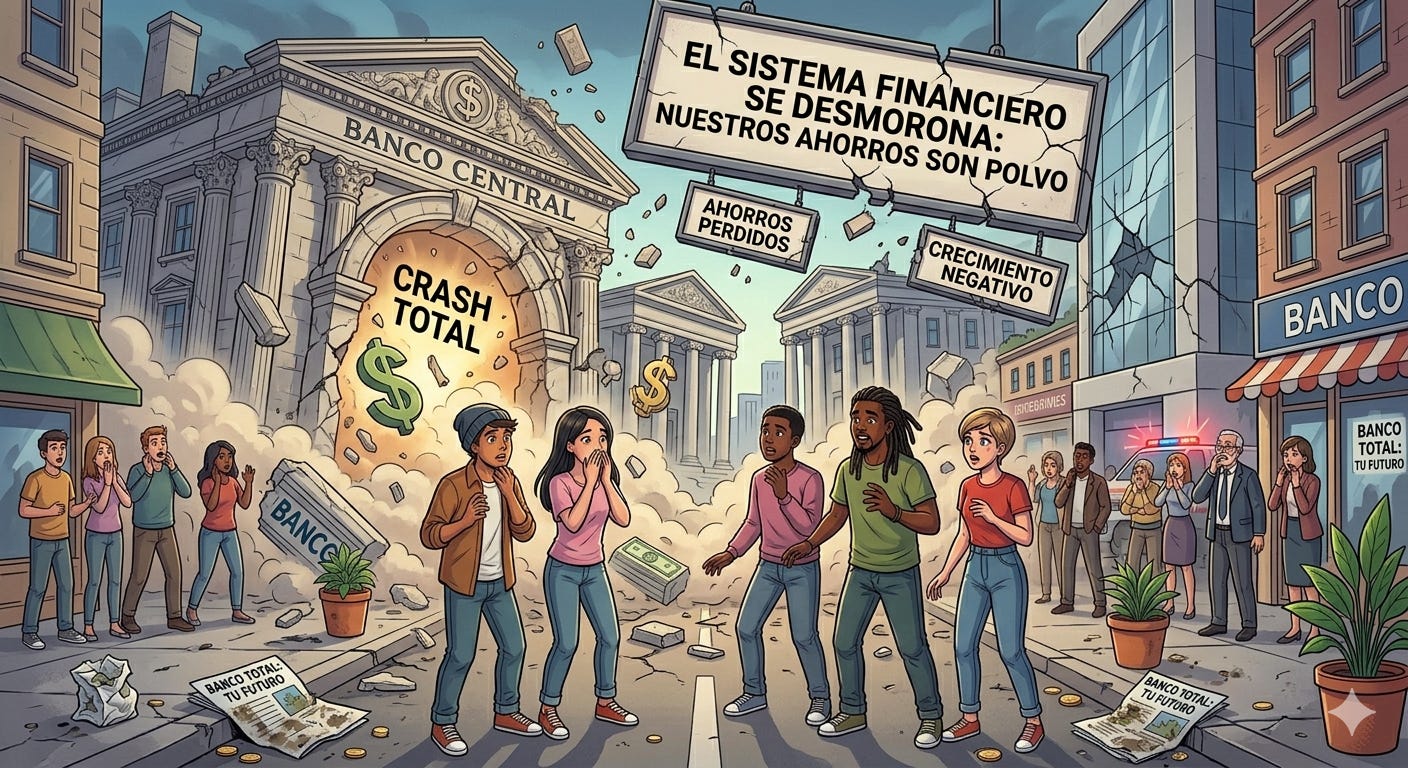
We grew up under a seemingly stable, almost unquestionable logic: study, work, earn, save, retire. That model didn’t just organize our economic life — it organized our relationship with time, with effort, and with the very idea of the future. It was a cultural contract that offered clarity and an implicit promise: if you did the right thing for long enough, the system would eventually reward you with stability. And yet that contract is being eroded by forces that don’t operate in a linear way but an exponential one — forces that ask no permission and announce no arrival; they simply reconfigure the environment we live in.
AI is perhaps the most obvious manifestation of this transformation. It’s driving down the value of many forms of work, especially those based on repetition or on processing structured information. What once took years of training and experience can now be done in seconds by trained systems. This doesn’t mean human work disappears, but it does mean a deep redefinition of its value. Effort on its own stops being a guarantee of relevance, and knowledge, when it’s replicable, stops being scarce. What really starts to matter is the ability to understand where that effort fits within broader systems that are constantly evolving.
At the same time, and in parallel, capital assets keep expanding at a rate higher than labor income. As Thomas Piketty pointed out, capital grows faster than income — but what truly matters isn’t the phrase itself, it’s the structural implication it carries. The system starts to reward ownership over effort, and that shift introduces a fracture in the model we inherited. If labor loses relative capacity to accumulate and capital gains capacity to expand, then the equation changes at the root. It’s no longer enough to take part in the system through work; you have to understand how to position yourself within it, how to interact with its dynamics, and how to anticipate its moves.
In that new scenario, income starts to become unstable, employment stops being a guarantee and turns into just one more variable inside an uncertain environment. Linear trajectories break, cycles shorten, and predictability — one of the pillars of the old model — begins to fade. It’s at this point that an uncomfortable but unavoidable truth emerges: money grows where it circulates, not where time is invested. This isn’t meant to devalue work, but to place it in its new position within the system. Work is still a means of generation, but the expansion of value happens on another layer, in another logic, at another rhythm.
This is precisely where saving, as we understood it, begins to lose its original meaning. Saving meant stopping money, preserving it, protecting it from the environment. It was a coherent strategy in a system where time didn’t significantly erode accumulated value. But in an environment where inflation acts as constant erosion and where dynamic capital is what earns the biggest rewards, stopping money stops being prudent and starts being costly. Saving, in its traditional form, stops being a preservation strategy and becomes an illusion of security — a feeling of control that doesn’t necessarily translate into real protection within today’s system.
If we widen the lens from an anthropological perspective, the pattern becomes even clearer. Every society has historically trained its new generations in the skills needed to survive within its environment. At one point it was hunting, then farming, later trade. Each transition redefined what it meant to be prepared. Today we’re facing a new transition, one where the critical skill is no longer solely producing value with the body or with time, but understanding how value moves within complex systems. In this context, saying that investing is the new hunting stops being an aesthetic metaphor and becomes a functional description of reality.
Investing determines access to resources, stability, and freedom. It’s the contemporary way of positioning yourself within the economy. Not teaching this skill doesn’t protect our kids from risk; on the contrary, it exposes them to a system they won’t understand, with no tools to navigate it. That said, reducing investing to a technical dimension would be a mistake. Investing isn’t only about knowing financial instruments or platforms — it’s a discipline that demands a deep understanding of yourself. It means managing emotions in volatile environments, holding decisions in the middle of uncertainty, and developing judgment when information is abundant but clarity is scarce. Risk stops being an enemy to avoid and becomes information to be interpreted, read, contextualized.
Within this same fabric another layer appears that’s rarely addressed with the seriousness it deserves: attention. We live in an economy where human time is captured, analyzed, and monetized with millimetric precision. Every digital interaction, every second in front of a screen, every seemingly trivial gesture is being converted into value for someone else. In this context, attention becomes an economic asset, and whoever doesn’t learn to recognize it ends up handing it over without realizing. The question stops being how much time we spend, and becomes who is capitalizing on that time. Your attention is already an asset — the difference is whether you know how to capture it, or whether someone else does it for you.
All of this leads us to a conclusion that goes beyond the financial. The change we’re witnessing isn’t technical, it’s cultural. It’s the move from an employee mindset to an owner mindset. It’s leaving behind thinking in terms of linear income to start thinking in terms of capital allocation, strategic positioning, systemic understanding. We need to raise individuals who don’t just take part in the system but understand it — who are capable of reading weak signals, of anticipating moves, and of making informed decisions in complex environments. Individuals who see money not as an end in itself, but as a dynamic system of relationships that’s constantly evolving.
This means teaching concepts like value, compound growth, and volatility from early on, but it also demands something much harder: teaching kids to hold a long-term vision in an environment engineered for instant gratification. Teaching them to wait when everything invites them to react, to build when everything incentivizes consumption, to think when everything pushes them to execute without reflection. It’s at this point that emotional intelligence becomes as important as financial intelligence, because no strategy, however sophisticated, survives if the person running it can’t sustain it over time. Without emotional control, no strategy survives.

The Map We Choose to Hand Down
The final question isn’t financial, it’s cultural — because it forces us to look beyond money and ask ourselves honestly what kind of humans we’re raising in a world where money stopped being static and became an intelligent, autonomous, constantly evolving system. It’s not a comfortable question, because deep down it exposes us as the hinge generation, that in-between point that received a map that worked but now carries the responsibility of handing it down updated for a territory that no longer responds to the same rules.
The problem isn’t in the past, nor in what we were taught, because that model was right in its time. The problem is that the environment changed faster than the narratives that explained it, and we keep passing on those narratives as if they were still enough. It’s in that lag where everything is decided, because when we hand down an outdated map, we don’t just confuse — we also limit. This isn’t a minor error; it’s a decision that shapes how our kids are going to interpret the world.
If we keep teaching the old paradigm (you have to save), we aren’t being prudent — we’re being blind to change. We’re preparing our kids to navigate a territory that no longer exists, a world where money could sit still, where linear effort built stability, and where time rewarded whoever simply knew how to wait. That world didn’t vanish all at once; it dissolved slowly, and in that process many never noticed.
But if we decide to update the map, then what we hand down stops being merely a financial tool and becomes something far more powerful. We give them the ability to read systems, to understand invisible dynamics, to recognize patterns before they become obvious. We give them the possibility of acting with intention, not from reaction, and of building their own relationship with money — not from fear, but from understanding. Because deep down, this was never just about money — it’s about preparing them to be free.
It’s about gaining degrees of autonomy in a system that tends to capture whoever doesn’t understand it, about being able to make decisions without being fully hostage to a single source of income, about being able to experiment, fail, and learn at stages where the cost is still manageable. It’s about breaking, once and for all, with the invisible inheritance of financial stress that marked entire generations.
That’s why it’s important to understand that investing early isn’t a privilege — it’s a form of literacy. It’s learning to read the language of the system our kids are already living in, even though many adults still don’t fully grasp it. It’s teaching them that money isn’t stored, it’s positioned; that it doesn’t accumulate by inertia, but moves with intention inside systems that amplify it.
But something even deeper happens when we teach this. We aren’t just teaching a skill — we’re activating a way of thinking. We’re changing the question that guides their lives. They’re going from asking themselves what job they’ll land, to asking themselves how they’ll build value, how they’ll allocate it, and how they’ll grow it inside systems that aren’t linear. That shift, subtle as it seems, completely redefines their relationship with the future.
A way of understanding that money is a dynamic system, that attention is an asset, that time isn’t something that passes but something that amplifies depending on how you use it, and that decisions, when they align with the right systems, can scale far beyond what individual effort would ever allow.
We need to explain to our kids that the future doesn’t wait, doesn’t pause for us to be ready, or for us to fully understand its rules. It advances, it reorganizes, it rewards those who take part and leaves behind those who stay static. In the middle of that constant movement, our kids aren’t watching from outside — they’re already inside the system.
They’re already being shaped by it, already interacting with its dynamics, already handing over their time, their attention, and eventually their capital, even if they don’t call it that.
The only question that really matters is whether they’ll arrive in that world with tools… or with obsolete instructions. That decision — despite all the technological complexity, despite the speed of change, despite the apparent inevitability of the system — is still ours.

DISCLAIMER
This document is intended exclusively for informational, educational, and futurist-analysis purposes. It does not constitute financial advice, an investment solicitation, or a recommendation to buy, sell, or take part in any instrument, company, project, or asset.
If anyone uses the content of this material to solicit money, investments, or economic participation, treat it immediately as a possible scam.
Always protect your personal and financial information.