

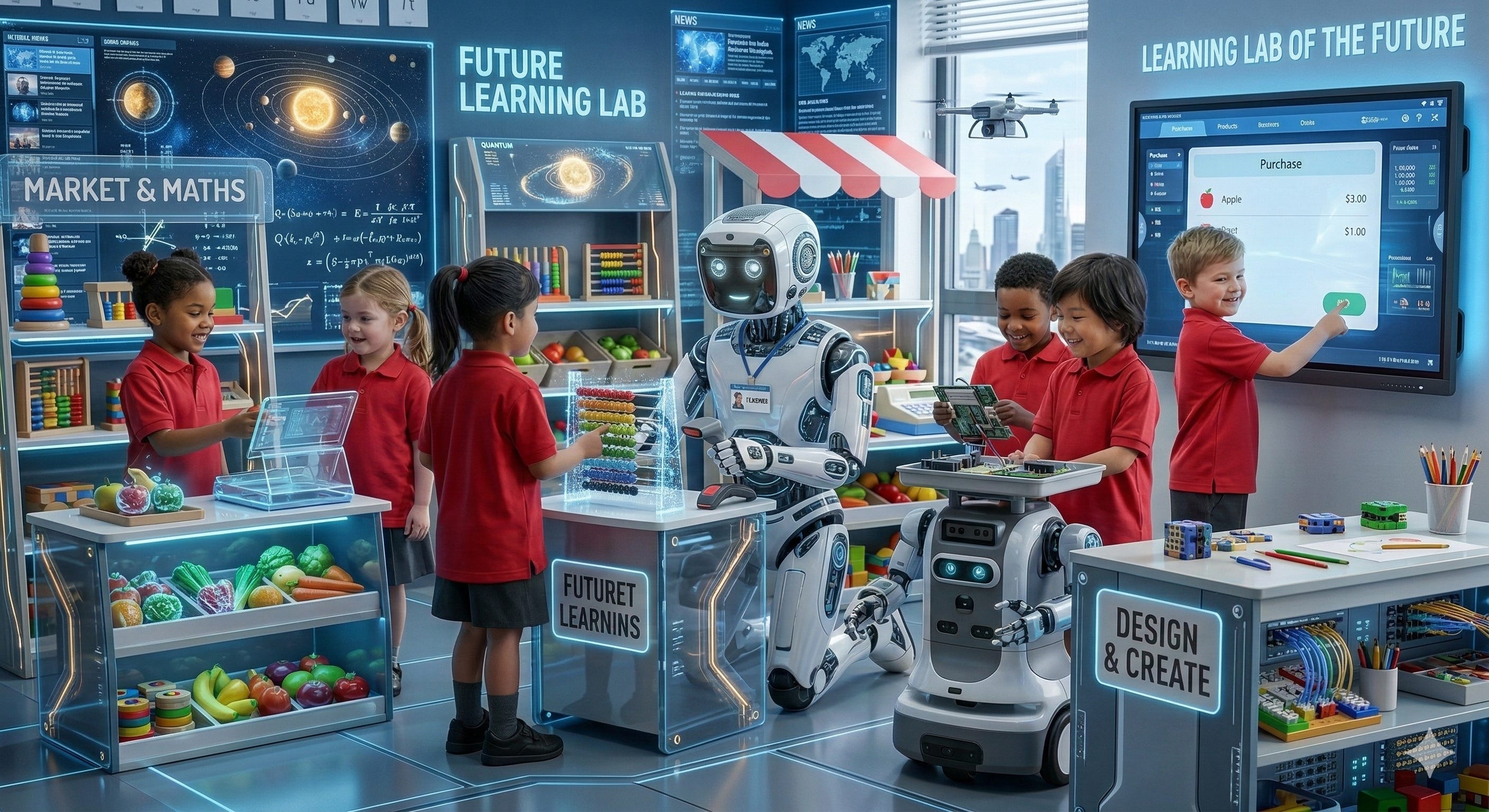
When Intelligence Became Abundant
For centuries, we humans organized our entire civilization around a quiet premise: intelligence was a scarce asset. Societies rewarded whoever could think better, calculate faster, remember more, or make more complex decisions. Universities became temples of intellectual selection — holding a college diploma became more valuable than holding a title from a royal court. The high-prestige professions grew up exactly where human thinking was hardest to replace.
And yet, thanks to the advances in AI, we are now entering a historic moment where that premise is starting to wobble. For the first time since we became a civilization, intelligence — at least in its computational form — is beginning to turn into an abundant resource. Artificial intelligence models, agentic systems, and humanoid robotics are extending the reach of automated thinking at a pace that just a decade ago seemed improbable. What once took entire teams of specialists can now be done by digital systems capable of analyzing data, writing code, producing text, interpreting images, or coordinating complex processes in a matter of minutes. What used to take us weeks can now be done in minutes.
This phenomenon should not be read as an existential threat or a technological dystopia; we should understand it as a transition toward a new paradigm (remember Thomas Kuhn’s concept of normal science from “The Structure of Scientific Revolutions,” which we’ve already discussed in earlier editions of FUTOPIX).
Along these lines, every great technological leap — agriculture, the printing press, the steam engine, electricity, the Internet — profoundly reorganized the role of human beings in the economy and in culture. The artificial intelligence revolution will be no different. What will change isn’t only the technology, but the very structure of economic value built around it.
Remember that when physical strength was abundant, industrial machines redefined human labor; when information stopped being scarce, the Internet transformed the knowledge economy. Now that computational intelligence is starting to multiply, we’re entering a new phase in the reorganization of the productive system.
In that context, an unavoidable question surfaces — especially for those of us who are parents, educators, or future-builders:
What should our kids study in order to thrive in a world where computational intelligence is no longer a scarce resource?
Answering that question demands that we look past the tech headlines. It requires understanding the weak or early signals that hint at where the global economic system is heading. That, in turn, calls for a foresight mindset — one capable of reading emerging patterns before they harden into dominant trends.
Recently, Citrini Research published a piece titled “The 2028 Global Intelligence Crisis,” in which they map out exactly these signals — not as a doomsday prediction, nor as an exercise in economic science fiction, but as an intellectual experiment that explores the possible consequences of a world where AI works so well that it transforms the very foundations of employment, productivity, and economic distribution.
From the FUTOPIX perspective, documents like this aren’t warnings we read in fear — they’re navigation charts, incomplete maps of territory still taking shape.
Some of the weak / early signals that show up in that analysis are cognitive automation, autonomous agents, partially robotized economies, and new financial infrastructures. They don’t describe an inevitable collapse; they describe a deep reorganization of the system — and, like every reorganization, it also opens new frontiers of opportunity.
Detecting and understanding these signals is the first step toward building a solid educational strategy for the coming generations, because the goal is not to protect our kids from technology, but to prepare them to use it as an extension of their creativity, their intelligence, and their capacity to build better slices of the future for the generations that follow.

Reading the Weak Signals…
Citrini Research describes a set of emerging mechanisms that, though still in their infancy, could profoundly transform the global economy over the coming decades. This symptomatic evidence doesn’t show up as abrupt ruptures, but as what we futurists call weak signals — early hints that reveal how the foundations of the productive system are slowly being reconfigured. It’s like learning to read the ventures cooking in a garage that carry the potential to change the world.
The first of these signals appears as a technological feedback loop driven by the compounding adoption of AI. As companies start integrating AI systems to boost operational efficiency, certain professional roles will experience a gradual shrinkage. What was initially rolled out as a support tool ends up becoming an optimization mechanism. When operating costs drop thanks to automation, organizations free up capital that they then reinvest in new technological optimizations. That capital feeds new productivity gains, which in turn incentivize more automation. The result is a virtuous cycle of technological acceleration that constantly feeds itself.
This kind of dynamic isn’t new. Similar phenomena played out during the industrial mechanization of the nineteenth century and later with the computer automation of the twentieth. But the fundamental difference in today’s revolution is that AI acts directly on the tasks demanding cognitive activity — the ones we used to think of as exclusively human. This isn’t just about replacing physical strength or repetitive chores; now the technology steps into the processes of analysis, interpretation, planning, and decision-making.
The first signs of this shift can already be seen in tools like GitHub Copilot, which dramatically amplify programmers’ productivity, or in advanced automated data-analysis systems that let companies run studies that once required entire teams of specialists. I’m not saying these advances wipe out human work entirely, but they do profoundly redefine its nature. Professionals in these fields will stop being the direct executors of these tasks and become designers, supervisors, or integrators of intelligent systems.
A second weak signal appears with a phenomenon some analysts have begun to call Phantom GDP. This concept describes an economy where a growing share of output is generated by machines that don’t take part in the traditional cycle of human consumption. Robots don’t buy homes, don’t plan vacations, don’t consume cultural goods. When a significant portion of productivity comes from automated systems, economic growth can begin to partly decouple from human employment.
We can already see early hints of this in fully robotized warehouses and restaurants, in highly automated logistics chains, and in factories where production keeps running through the night with no direct human presence. These systems generate enormous efficiency and economic value, but they also redistribute the gains toward whoever owns the technological infrastructure, the computational capital, or the automation platforms.
Another meaningful signal emerges with the arrival of agentic AI (AAI) — that is, systems capable of planning, executing, and correcting complex tasks autonomously. What sets agentic AI apart from traditional software models is that these systems don’t just respond to specific instructions. They can analyze goals, design strategies, and execute multiple intermediate steps to reach them.
The first versions of these technologies can already be seen in experimental tools that can write complete software, manage business processes, or coordinate complex logistics operations. Systems like these suggest that many layers of economic intermediation could gradually vanish. When an intelligent agent can weigh options, compare prices, negotiate terms, and execute decisions in a matter of seconds, the traditional frictions of the market start to drop sharply — in some cases all the way to zero (take a look at openclaw).
This phenomenon seems to be on a collision course with another quiet transformation moving in parallel. I’m talking about the evolution of global financial infrastructure. In the digital ecosystem, there already exist blockchain-based payment networks capable of near-instant transactions at extremely low cost. Platforms built on networks like Solana are proving that value can move without the traditional layers of financial intermediation.
If (AAI) agents begin to interact economically with one another — negotiating purchases, contracting services, managing digital resources — we could enter a stage where economic transactions become partly autonomous. In that scenario, some components of the traditional financial system will have to adapt to a far more automated and programmable environment. Something that traditional banking finds both hard and painful.
When we look at these signals together — cognitive automation, Phantom GDP, agentic AI, and the new decentralized financial infrastructures — a clear pattern emerges. This isn’t a simple technological evolution; it’s a profound reorganization of the global economic system.
Now, these signals should not be read as announcements of inevitable crises. Economic history shows us that every great technological transformation generates both disruption and new opportunity. What these signals are really showing us is that the foundations of productivity, of human work, and of value creation are entering a liminal phase of transition.
Understanding these transitions before they become trends is precisely the point of strategic foresight. Because in the moments when the system begins to reorganize itself, those who manage to read the early signals don’t just adapt to the future — they dare to build it.
The Professions in Transformation
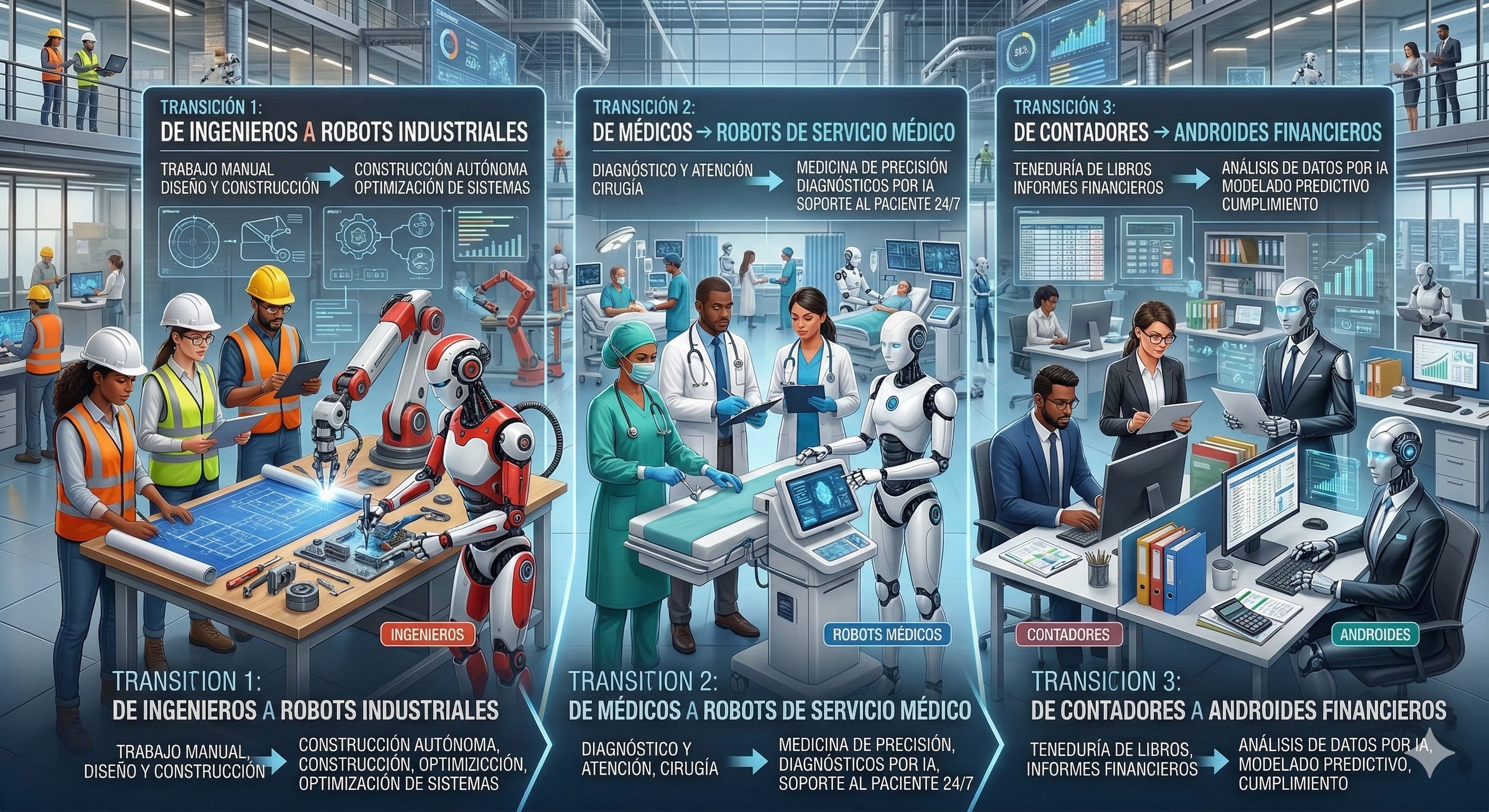
When you look at these signals together, a structural shift in the labor market comes into focus. I should note that not every profession will face the same degree of transformation. The occupations whose essence is mainly about processing information in routine ways are among the most exposed to the reconfiguration AI brings.
For decades, much of the knowledge economy was organized around tasks like reviewing documents, comparing information, processing data, or verifying procedures. Professions such as operational accounting, routine financial analysis, legal contract review, or certain kinds of commercial intermediation were born precisely in a context where the ability to analyze information was limited, expensive, and slow. That context is changing forever.
Today, intelligent agents can analyze contracts, catch regulatory inconsistencies, compare financial terms, or process massive volumes of data in seconds. This capability doesn’t automatically mean those professions disappear, but it does mean a transformation of their operational core. A professional’s value will no longer sit so much in performing the basic analysis of the information, but in interpreting its implications, designing strategies, and making complex decisions inside uncertain contexts. These roles will have to shift from passive agents to active players — we’ll move from the accountant who only presents the books to the one who suggests strategy.
A similar phenomenon is starting to show up in software development. For a long time, writing code was a skill held by a few, considered highly specialized and demanding years of technical training. But the arrival of AI-assisted programming tools is beginning to automate part of the most repetitive tasks in the development process. Generating simple functions, fixing syntax errors, or completing code snippets are activities today’s systems can already handle very efficiently. When it comes to laying out architectures and wireframes, AI does it faster than humans and without mistakes. What used to take a developer weeks, AI does in minutes — with the added advantage that the user can iterate with the system in real time until they land on the result they want.
This doesn’t mean developers are going to disappear. What will probably happen is a migration of the purely technical roles toward higher levels of abstraction. The engineer of the future will have less to do with hand-writing every line of code and more to do with designing ontological systems and technological architectures, integrating them into complex systems, and supervising fully automated environments. In other words, engineering will evolve from technical execution toward the orchestration of ontological systems.
In parallel, the development of humanoid robots will introduce a new component into this transformation. Unlike traditional industrial robots designed for extremely specific tasks, humanoids aim to replicate human physical capabilities — walking, manipulating objects, interacting with variable environments. For anyone who imagines the humanoid sitting beside you typing information into a keyboard, the answer is: why would it? Typing data is a wildly inefficient process. Just think about how R2-D2 (Star Wars) jacks into a spaceship’s systems, plugging directly into the network to transmit packets of information. Humanoids will simply send data via proxies — even over Bluetooth signals.
Although these devices are still in early phases of development, their potential points toward taking part in activities like advanced logistics, technical maintenance, or certain flexible-manufacturing operations (FUTOPIX has plenty of articles on this).
The challenge isn’t about defending specific occupations against technology. The real question is understanding which human skills become more relevant as technology advances. In this transition, those skills tend to cluster in areas dominated by interpretation, creativity, strategic judgment, and the ability to grasp complex systems.
In the end, the professional map of the future won’t be defined solely by the arrival of new technological tools. It will be defined by the way human beings learn to integrate them within broader economic, cultural, and social structures. That’s exactly where human intelligence remains decisive.
What Our Kids Should Study
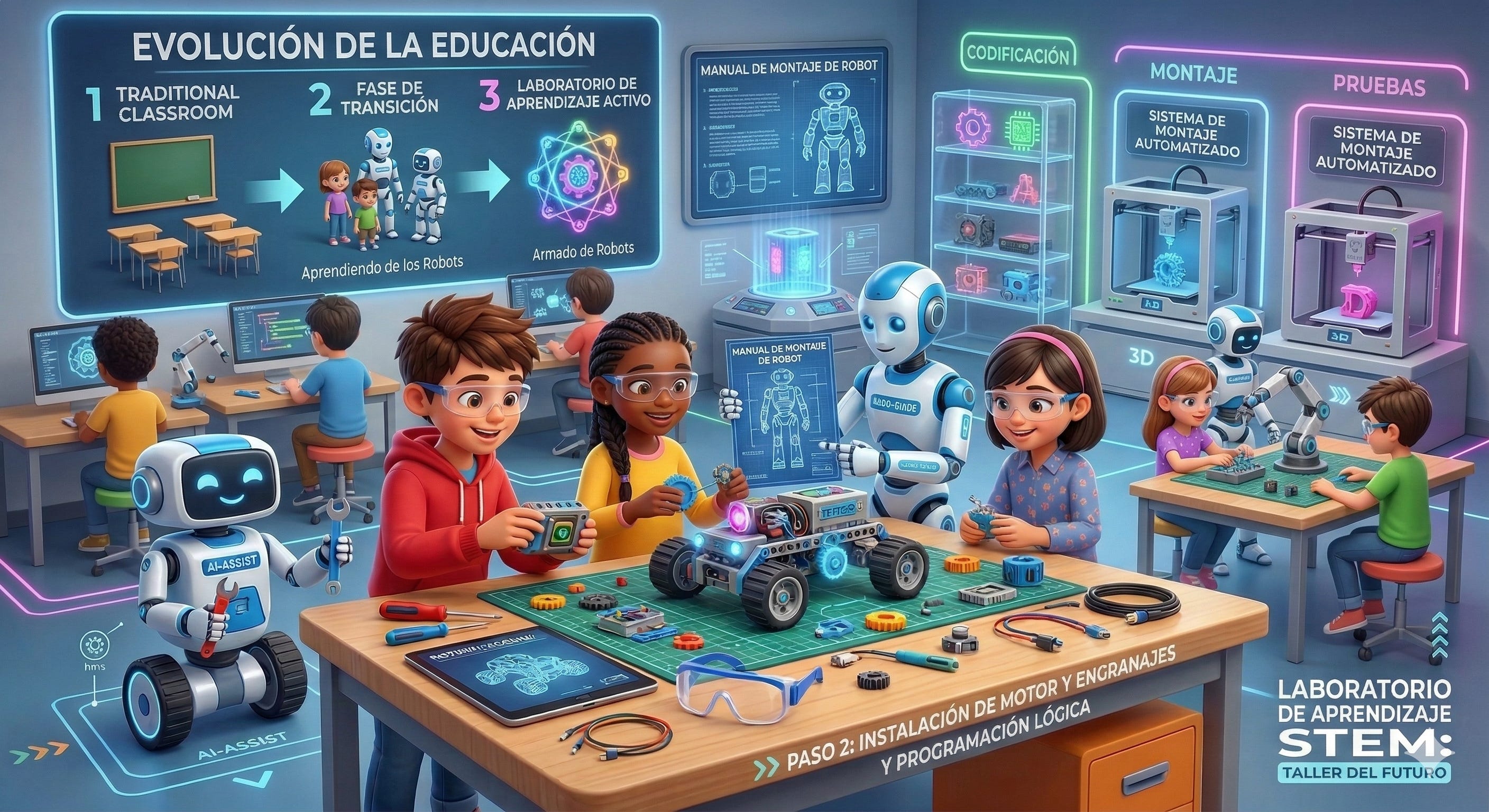
If we accept that the near future will be a hybrid ecosystem where human intelligence and artificial intelligence coexist, then it’s obvious that education will have to transform as deeply as the economy and technology have. For decades, educational systems have been designed to prepare individuals capable of performing specific tasks inside relatively stable labor structures. But in a world where machines are taking on more and more operational functions, education has to reorient itself toward capabilities that let human beings understand, direct, and expand the technological systems now emerging.
One of the pillars of this transformation will be solid AI literacy. It’s not that every student has to become a specialized machine learning engineer or a data scientist. The broader challenge is understanding how intelligent systems work, what kinds of decisions they can make, and where their limits lie. Just as digital literacy became indispensable in the Internet era, in the coming decades grasping the logic of algorithms and machine-learning models will be part of the basic knowledge of any educated citizen.
This understanding will unlock something more important than mere technical skill. It will make it possible to interact critically with the machines, to design more useful tools, and to keep automated systems from becoming black boxes that most of society can’t comprehend.
A second inevitable educational pillar will be philosophy and applied ethics. As automated systems take part in decisions tied to the economy, medicine, justice, or public administration, moral questions will stop being academic debates and become practical problems of social design. How should intelligent systems behave in situations of conflict? How are the gains of automation distributed? How do we protect human autonomy in an environment increasingly mediated by algorithms?
Faced with these questions, philosophy stops being an abstract exercise and turns into a strategic discipline for governing technological societies. Understanding ethics, political theory, and the philosophy of knowledge will let us shape individuals capable of designing institutions that weave together technology and social responsibility.
A third fundamental component will be the deliberate development of creativity and emotional intelligence. Machines are demonstrating an enormous capacity to process information, but they still struggle to fully grasp human contexts, cultural narratives, and the emotional complexity that defines societies. For that reason, creative and emotional capabilities shouldn’t be treated as educational extras, but as strategic assets in the economy of the future.
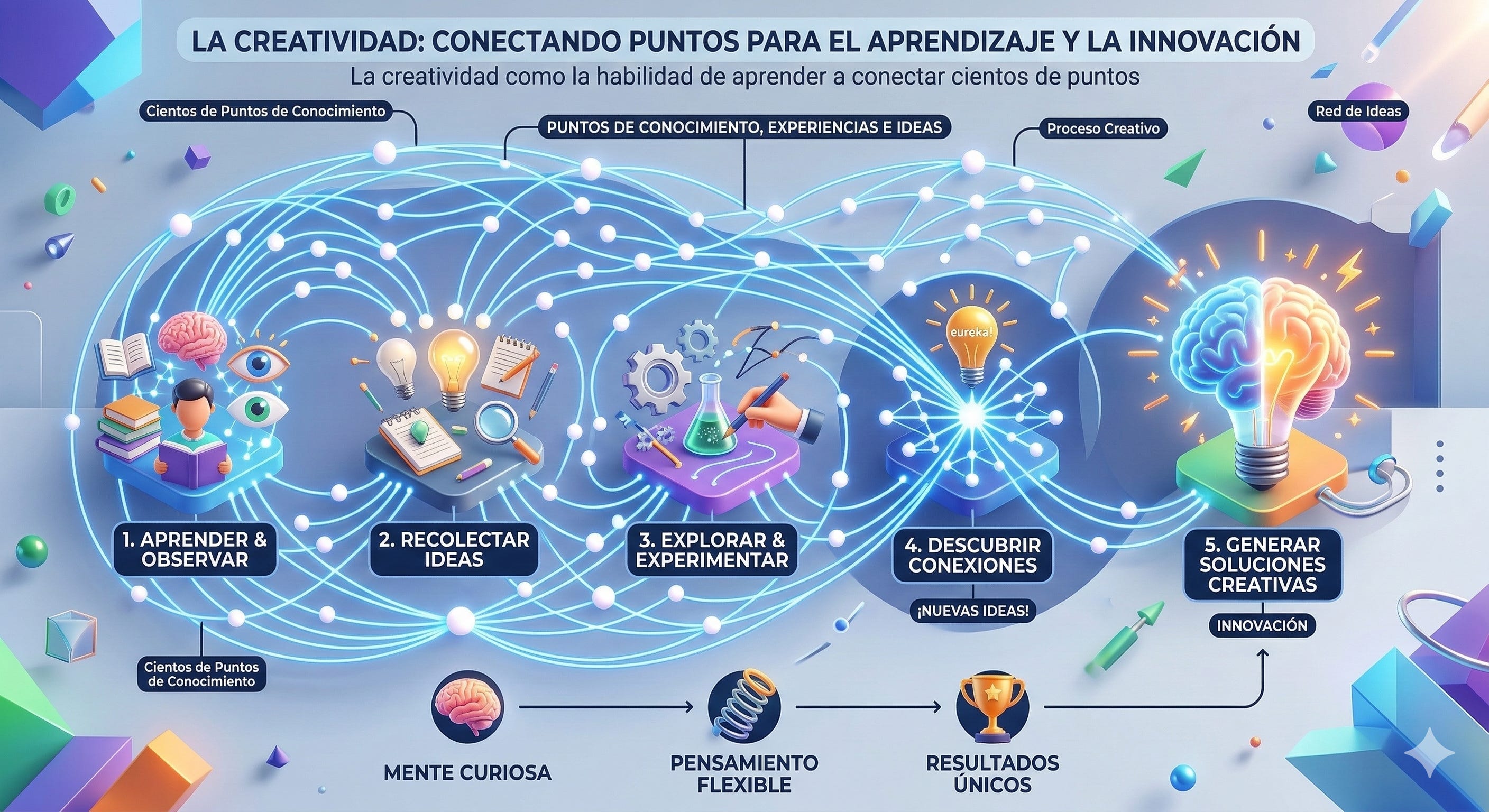
The arts, music, theater, literature, and visual storytelling work as genuine laboratories of human imagination. That’s where you train skills like symbolic interpretation, the construction of meaning, and the ability to connect seemingly unrelated ideas. In an economy where information is abundant, the ability to imagine new combinations of knowledge takes on extraordinary value.
Alongside these humanistic dimensions, it will also be crucial to strengthen applied technical training. The next generation will live side by side with robotic systems, automated infrastructure, and complex technological environments. That’s why educational programs that integrate mechanics, electronics, mathematics, physics, bioelectronics, bioengineering, biomechanics, and AI will produce professionals able to work directly with the physical technologies that will shape the economy of the future.
This kind of training won’t be confined to traditional academic labs. Technology workshops, digital-fabrication environments, and hands-on learning programs will become essential spaces for developing skills that blend technical thinking with real-world problem-solving.
Finally, the education of the future will inevitably lean toward interdisciplinarity, and toward the skills for cross-cutting thinking (T-shaped knowledge). The great innovations rarely come from a single field of knowledge. They arise when different disciplines meet and mix. Biology meets robotics to create new forms of bioengineering. Art crosses with technology to produce immersive experiences. Psychology integrates with design to build more intuitive human interfaces.
In this new educational paradigm, students won’t be trained solely as isolated specialists, but as integrators capable of connecting diverse knowledge to solve complex problems.
Preparing our kids for this future doesn’t mean pinning down a rigid list of professions. It means equipping them with a flexible intellectual architecture, one that can evolve as the world changes. Because in an era where intelligence becomes abundant, the true human advantage will lie in the capacity to keep learning, reinterpreting, and continually creating new forms of knowledge.
A Balanced Vision of the Future
When we analyze large-scale technological transformations, it’s common to find narratives dominated by risk. Every great innovation has stirred up similar fears — job loss, economic collapse, the dehumanization of society. And yet, culture is the great filter that always points us toward social reinvention.
Every industrial revolution began with uncertainty. Mechanization transformed farm work, electrification reorganized cities, and digitization radically altered the information economy. But in every case, the transition periods ended up generating new forms of prosperity, new professions, and new social capabilities.
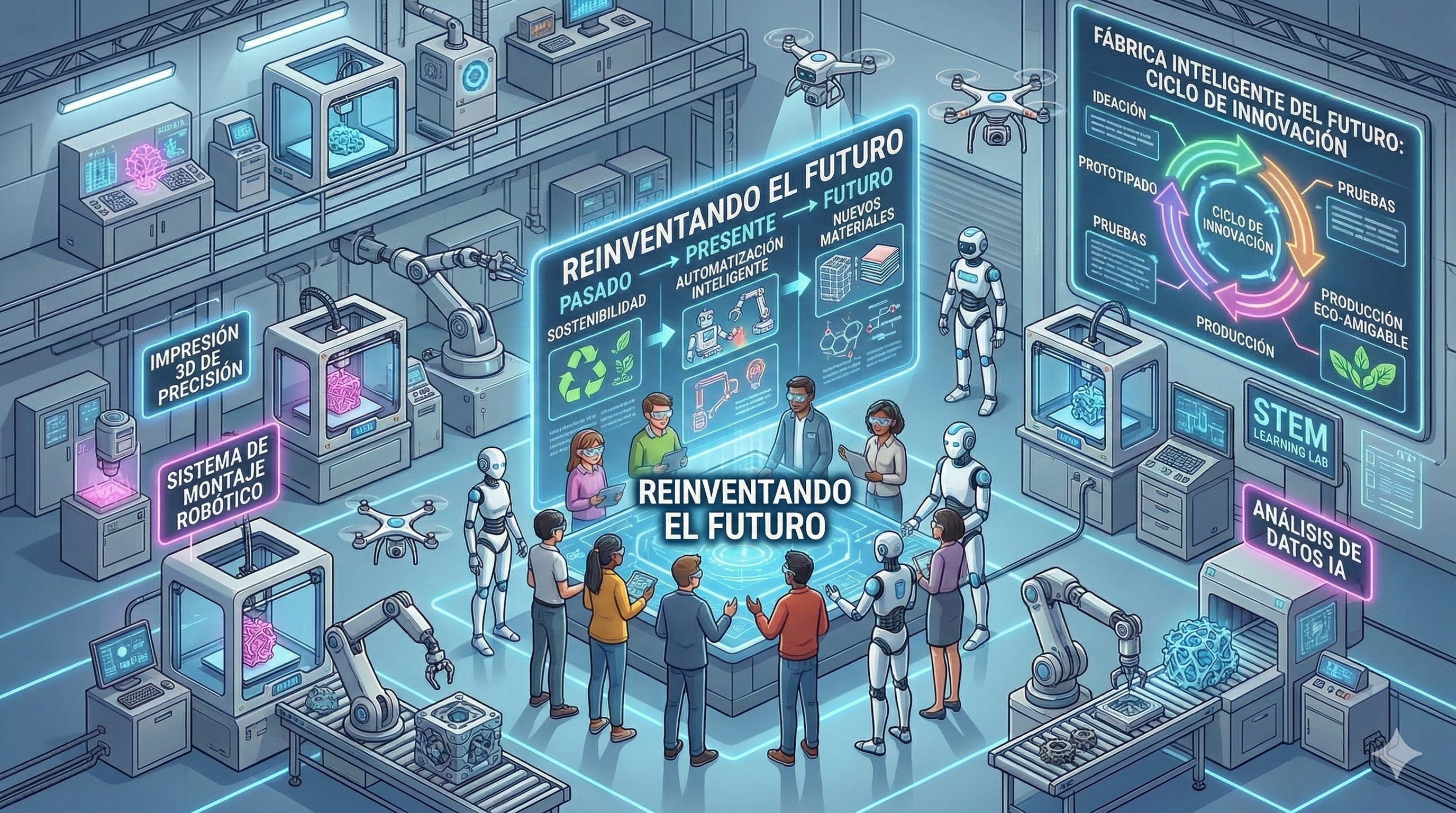
The arrival of AI should be understood within that same historical frame. This isn’t a technological anomaly; it’s a new stage in the evolution of the tools that amplify human capability. Managed with institutional intelligence, this technology could unlock levels of productivity that until recently belonged to the realm of economic speculation.
Intelligent automation has the potential to meaningfully cut the time people spend on repetitive or highly structured tasks. In that scenario, a considerable share of human energy could shift toward activities dominated by creativity, scientific research, cultural exploration, and social innovation. What we perceive today as disruption could, over time, become an expansion of the space for human action.
But for that transition to unfold in a balanced way, the central challenge won’t be technological — it’ll be organizational. Societies will have to develop new ways of distributing the gains from automation while, at the same time, ensuring their educational systems evolve at the pace of technological change. In other words, technical progress on its own doesn’t guarantee collective prosperity. The way we organize our institutions will determine the final outcome of this transformation.
The Challenge Isn’t AI — It’s Our Imagination
Every technological revolution produces two great cultural narratives. On one side, a narrative of fear appears, imagining a future where machines end up displacing human beings. On the other, a narrative of construction emerges, one that reads technology as an extension of our cognitive, creative, and productive capabilities.
Historical experience suggests that the second narrative tends to win out over time. The printing press didn’t eliminate human thought; it multiplied the circulation of ideas. Electricity didn’t replace human labor; it radically expanded industrial and urban productivity. The Internet didn’t shrink cultural creativity; it opened up an entirely new space for expression, collaboration, and global knowledge. AI will most likely follow a similar path.
It’s true that some professions will be transformed, it’s true that certain economic models will have to adapt, and it’s true that the value of human work will evolve into new forms. But these transformations don’t represent the end of human relevance. Rather, they represent a historic opportunity to redefine what kind of intelligence we want to cultivate as a civilization.
For far too long, educational systems focused on training individuals to repeat processes, memorize information, or execute highly structured tasks. That model answered the needs of an industrial economy where operational efficiency was the main organizing value.
The world now beginning to emerge is different!
In the era of abundant intelligence, the human advantage won’t lie in processing information faster than a machine. That contest no longer makes any sense. The real human differentiator will be the capacity to imagine new possibilities, integrate diverse fields of knowledge, interpret complex contexts, and build meaning inside dynamic social systems.
It will be the ability to connect seemingly distant disciplines, it will be the capacity to understand complex systems, it will be the talent for creating cultural narratives that steer technological development, and it will be, above all, the capacity to design institutions that harness technology without losing the deeply human dimension of society.
Our kids won’t grow up in a world where they have to compete against AI. They’ll grow up in a world where they live alongside it — and that simple fact completely changes the rules of the game.
The leaders of the next generation won’t necessarily be the ones who accumulate the most information. They’ll be the ones who learn to ask the right questions in an environment where the technical answers can be generated in seconds. They won’t be the ones who memorize formulas, but the ones who understand how to combine technology, creativity, and ethics to design systems that work at human scale.
Because the real revolution doesn’t happen inside the algorithms. The real revolution happens in the way we choose to educate, organize, and project our society into the future.
That’s why the most important question is no longer whether AI will transform the world. That transformation is already underway — it’s imminent.
The truly decisive question is another one:
Will we be capable of preparing the next generation to lead this transformation with intelligence, imagination, and purpose?
I’ll leave the question open…
“Innovation is rarely about inventing something completely new; it almost always comes from learning to combine what already exists. Machines may multiply intelligence, but only humans can give it direction. That’s why the future won’t belong to those who compete with artificial intelligence, but to those who know how to imagine new combinations to build what doesn’t yet exist.”

DISCLAIMER
This document is intended purely for informational, educational, and futures-analysis purposes. It does not constitute financial advice, an investment solicitation, or a recommendation to buy, sell, or take part in any instrument, company, project, or asset.
If anyone uses the content of this material to request money, investments, or financial participation, treat it immediately as a possible scam.
Always protect your personal and financial information.