


After almost three decades of building companies, one of the things I still find hardest to accept is “thinking small.”
I’ve been lucky in life. I ran into mentors who took me by the hand along the road that got me here. Many of them taught me more than the university ever did. These were people who could see the future without breaking a sweat. Sometimes they handed me great lessons, and sometimes a well-earned smack on the head. I owe them a great deal. As Sir Isaac Newton put it: “If I have seen further, it is by standing on the shoulders of giants.” That legendary line applies to my mentors word for word.
Today I want to remember and thank two of them in particular: Augusto López Valencia and Nicanor Restrepo Santamaría — two towering figures of Colombian business. To both of them I want to say, THANK YOU!
From Augusto López I learned never to leave for tomorrow what could be done today. I remember that in some of the board meetings I was privileged to be invited to, I watched tasks get assigned to him — and the astonishing part was that before the meeting was over, he’d already finished them. His execution was flawless. Augusto didn’t manage time; he simply bent it to his will. When you were with him, you just knew you had to get to the point, deliver the data, skip the backstory — if he needed the story, he’d ask for it.
Nicanor taught me to plan, but one of the things that impressed me most about him was his humility. He was like a big kid, like a boy scout — always ready! I had a few chances to spend time with him in his working world, and beyond that I was his diving buddy on countless occasions off the island of Providencia.
One morning, when he’d invited me to his office at the headquarters of Suramericana de Seguros, he said to me in a playful tone: “Come on, let’s sit in the famous boardroom of the Antioquian syndicate.” While we were swapping stories about our underwater adventures, the speaker on his desk crackled to life, and out of the little black box came the voice of his secretary, Anita Duarte (whom I also remember with great fondness — Anita, thank you for being so kind to me). In the middle of our conversation, Anita’s sweet voice said: “Doctor, you have a call on the line…” To which he replied: “Tell them to wait a few minutes.”
We kept talking… and after a while, the speaker buzzed again. It was Anita once more. “Doctor, don’t forget you have a call…” He answered again: “Tell them to wait…” We carried on chatting like a couple of street kids sharing a soda and a loaf of bread — and I say that more about myself than about Nicanor, whose decency and presence were beyond compare.
Finally the phone rang one more time, and this time Anita said: “Doctor… it’s the Minister of…” And he, in a firm voice, answered: “Tell the Minister I’m with a gentleman just as important as he is…”
I was stunned after hearing that. I told him: “Don’t worry, I can wait.” He apologized, picked up the phone, and dispatched the call in a couple of minutes. What Nicanor taught me that morning I didn’t understand until years later: in the attention economy, deciding who you make wait is deciding who you are.

The Sentence I Didn’t Understand
Nicanor and Augusto shaped my life for the better. I carry them deep inside me; I feel a profound affection and a gratitude to life itself for having known them. They were extraordinary teachers to me. But today, when I look back, I think that maybe the biggest thing they taught me was something they repeated every time I brought them a project:
“You’re not thinking big enough… come back when you’ve got something bigger.”
Somewhere between frustration and disbelief, I walked out of their offices many times. I couldn’t grasp what these heavyweights were talking about. Only later did I come to understand what they meant. Neither of them was asking me for more ambition. They were asking me to think on a different operating system.
Brazil, or the Country Where I Learned What Scale Means
Life placed me in Brazil, a marvelous country I love and respect deeply. It was there that I learned what scale really means. Brazilians themselves say that Brazil is home to “as coisas mais grandes do mundo” — the biggest things in the world — and they’re not exaggerating.
In that geography I had the chance to work for one of the largest security companies on earth, and I was blindsided more than once.
I remember once heading out to meet a man in a town barely two hours from São Paulo. My sales agents had told me this fellow ran a fleet of more than five thousand trucks. So I psyched myself up to deliver the pitch of my life — we needed that account to close the quarter. I armed myself with a solid slide deck and my sharpest outfit for the meeting.
When I got to the address, there were no offices, no marble, no receptionists, nothing at all. I arrived at a parking lot the size of a soccer stadium, and in the middle of it stood a prefab shack, out of which came a man in Hawaiian flip-flops — chinelos, as they call them in Brazil. Honestly, I thought he was the lot’s watchman, so I told him I’d come to meet Fausto, and with colossal humility he said:
“Come in and have a seat over there,” pointing at a table.
A little plastic table with cheap plastic chairs. He turned around and said: “Quer um cafezinho?” — Want a little coffee? I nodded. And without another word, he said: “How can I help you? I’m Fausto…”
Not even in a comic-strip gag would I have fallen flatter on my back. Plop!
A few weeks later they sent me to a meeting in Brasília. This time I’d be meeting with the legal counsel to the Minister of Finance, Dr. Wilfrido Augusto Marques. I arrived on a Friday and figured I’d use the weekend in the Brazilian capital to learn a bit more about the place. I reached the Planalto — a city designed on a drawing board by President Juscelino Kubitschek and architect Oscar Niemeyer a few decades ago. Honestly, it’s a city built like it’s made of Legos; the scale of it is staggering.
That weekend, Dr. Wilfrido invited me to spend the day at his farm. Like any hillbilly, I didn’t picture anything extraordinary — we paisas from the Colombian mountains are used to farms, I told myself. But as we drove out there, the proportions started to sink in. The man’s little farm held 90,000 head of cattle, plus kilometers upon kilometers of corn and soy. He had his own airport, warehouse after warehouse, robotic roaming irrigation systems, and an animal-genetics lab that no university in Brazil could match. To top it off, Dr. Wilfrido boasted that the president of China had come to visit him to study his cattle operation.
Now, past all the color of these stories — what did Augusto, Nicanor, Fausto, and Wilfrido have in common?
Every one of them, always, told me the same thing: think big.
But here’s what matters: none of them looked big. That was the first crack in the way I understood the world.

Thinking Big Is Not an Intellectual Problem
What I only came to understand many years later is that thinking big is not an intellectual problem.
Most people believe the limit lies in intelligence, in education, or even in talent. But no — the real limit is in the emotional and cultural capacity to hold an idea that doesn’t yet exist.
Thinking big produces fear and vertigo, and neither of those emotions is rational; they’re biological responses. We humans evolved over tens of thousands of years in small tribes, where standing out too much could be dangerous. In anthropological terms, belonging mattered more than standing out. The group guaranteed food, protection, and survival. Whoever strayed too far from the average could be cast out — and on the savanna, expulsion was a death sentence.
Even though today we live surrounded by satellites, artificial intelligence, and global financial markets, the deep brain still runs on many of those same primitive rules. We’re carrying 200,000-year-old hardware trying to run software from the year 2026.
That’s why, when someone says they want to build something enormous, the natural reaction from those around them is almost never support. What usually shows up is suspicion:
“You’re crazy,” “that’s impossible,” “be realistic,” “start small,” “you’re such a dreamer.”
Society rewards prudence because prudence lowers collective risk. But here’s the interesting part: nearly every great transformation in history was initially considered absurd.
Thinking big means breaking the psychological pact of the average, and that makes people deeply uncomfortable, because it is, technically, an act of tribal disobedience.
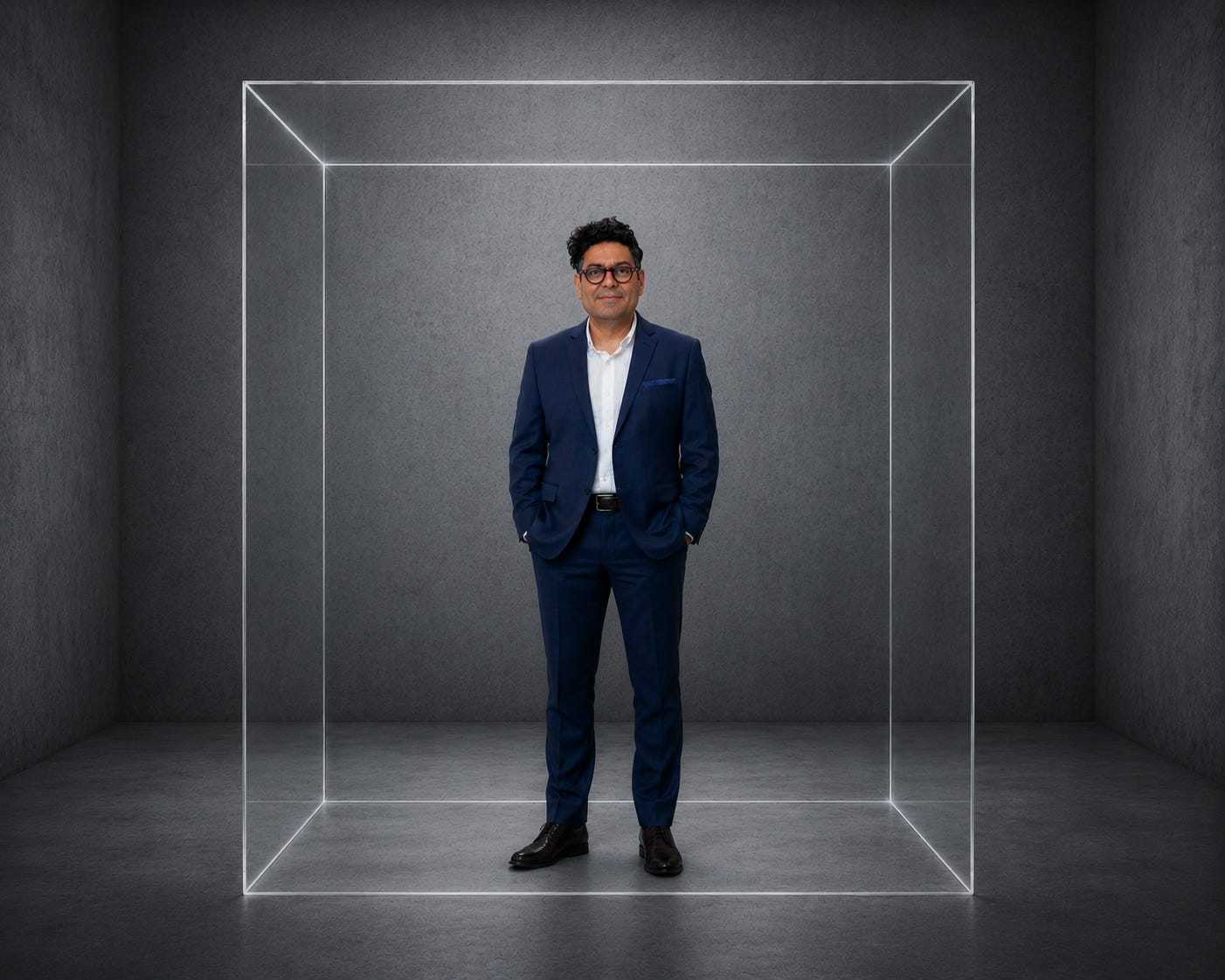
The Invisible Cage
As I matured, I came to understand that Augusto and Nicanor weren’t simply talking to me about business. They were talking about mental scales. They were trying to pull me out of an invisible cage — a cage built by years of industrial-era schooling, economic fear, and a culture of survival.
The Latin American education system — and honestly, much of the Western one too — was designed during the Industrial Revolution to train administrators of existing structures, not creators of new realities. We were trained to answer questions, not to think conceptually. We were taught to work by minimizing risk and error, not by expanding the range of the unimaginable. We were taught to study in order to land a good job, rather than to build large-scale systems. School shaped us to solve the problems of the past, and that had enormous consequences for our mental models. Most people don’t fail because they think too big; many fail because they never gave themselves permission to try.
What Brazil Taught Me About Power
I remember perfectly something that hit me hard while living in Brazil. In Colombia — and I say this with respect and affection — we often confuse sophistication with capability. We’re impressed by big offices, elegant buildings, fine ties, and ornate speeches. But Brazil taught me something completely different: real scale often operates in silence.
Fausto had five thousand trucks and ran them from a cheap plastic chair, wearing flip-flops. Wilfrido managed an agro-industrial operation the size of a small country and talked about animal genetics with total ease while you were still trying to wrap your head around the size of his farm. That’s where I understood something fundamental: people who think big usually stop needing to look big.
That completely changes how you understand power. Because real economic power rarely makes noise. It’s too busy executing.
I think there’s another reason people struggle to think big: we grew up surrounded by false representations of success. We were sold the entrepreneur as a spectacle — Instagram with rented jets, podcasts full of canned one-liners, photos with borrowed cars — when the truth is that the great builders often operate from discipline, repetition, and a brutal ability to see scale where others barely see chores.
Whoever has to look rich isn’t rich yet. Whoever has to look powerful isn’t powerful yet. What’s truly scarce is what doesn’t yet need to be announced.
The Emotional Cost of the Long Horizon
Thinking big requires tolerating long horizons, and long horizons collide head-on with modern culture’s addiction to instant gratification.
Today we live in a dopamine economy. Everything is designed to produce immediate reward: social media, real-time metrics, likes, fast consumption, short attention cycles. But building something truly big is profoundly anti-dopaminergic. It demands years of invisibility, it demands planting without applause, it demands holding on to a vision when no one else understands it yet. Sometimes, when you don’t fully understand it yourself anymore.
That’s probably one of the most painful reasons so many people abandon their ideas too soon: they can’t stand the psychological void between the vision and the validation. Because thinking big carries an enormous emotional cost. You start to feel strange. You start to feel out of sync with those around you — sometimes even with your own family. The conversations change, the worries change. While some are worried about surviving the month, others are trying to figure out how to build something that will transform an entire industry within ten years.
It’s not about arrogance. What happens with people who think big is that they live on different timescales.
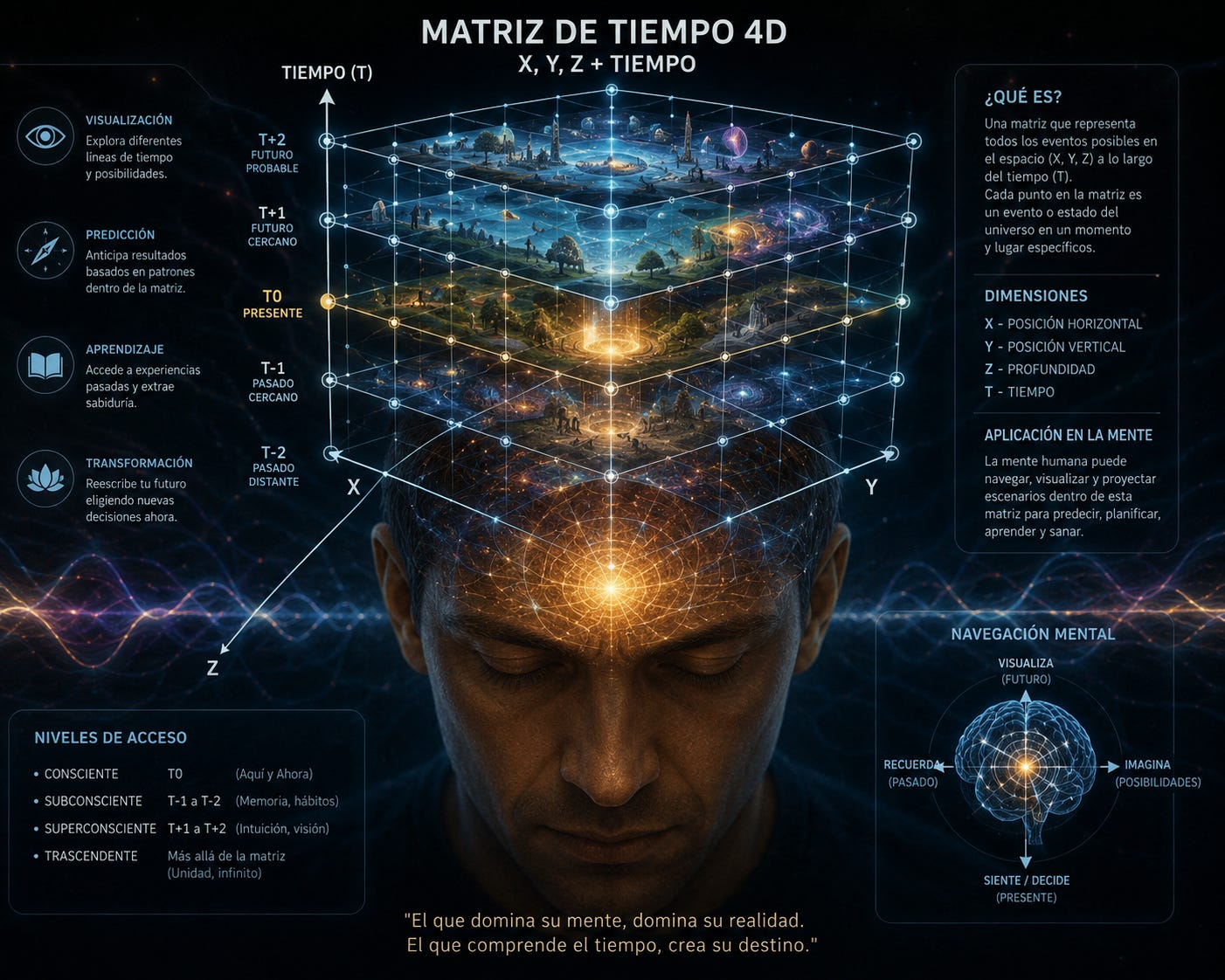
The Relationship with Time
Over the years I discovered something else fascinating: people who think big develop a different relationship with time. Most people use time to survive, while great entrepreneurs use time to multiply systems. That difference sounds subtle, but it reshapes entire economies — think of Elon; everything he builds is at mega-scale.
When you watch the great entrepreneurs, scientists, architects, or strategists of the world, you find a recurring pattern: they can all endure very long stretches of uncertainty without abandoning the vision. They don’t do it per se, or out of motivation. They do it because of their psychological structure — they have a different way of relating to the future.
There’s an old Japanese principle in The Book of Five Rings by Musashi, the samurai who wrote the definitive manual on strategy — a man I quote often. He says something like this: “the strategist’s gaze is twofold.” There’s sight, which is what’s right in front of you, and there’s perception, which is what’s happening beyond. Then he adds a line that’s haunted me for years: you must see the distant as near, and the near as distant. That is exactly what Augusto and Nicanor were trying to teach me without my knowing it. The urgent problems of the quarter, far away, way off in the distance. The twenty-year vision, here, right here, in my hands, tangible. Most people live it backwards.
Today I understand Augusto and Nicanor better. They weren’t trying to tear down my ideas; they were trying to expand my frame of reference. When someone tells you “you’re not thinking big enough,” what they’re really telling you is something far deeper:
“You’re still measuring your life by the size of your fears, not by the size of the possibilities.”
I’ve discovered that thinking big doesn’t necessarily mean building gigantic companies or becoming a billionaire. Thinking big can also mean building a life outside the mental average imposed by your surroundings. It can mean daring to imagine different futures. It can mean breaking inherited narratives. It can mean giving your imagination permission to operate without apologizing for it.
Because in the end, civilizations advance thanks to people who were capable of holding on to ideas that at first seemed ridiculous.
There was a time when crossing oceans was ridiculous, when flying was ridiculous, when reaching the Moon was ridiculous, when the internet was ridiculous, when building a rocket-launch base in Urabá — a remote corner of Colombia — was ridiculous. Many of the things that will transform the coming decades probably look ridiculous today too.
Maybe that’s why thinking big costs us so much. Because it forces us to see the present as something transitory, and not as a permanent structure. It forces us to accept that the world can reconfigure itself far faster than our emotional culture is prepared to process.
The final trap, the one it took me decades to see
The leap in scale — the real one — is not something the world grants you. It’s not a permission a boss signs off on, nor a blessing handed out by a university, nor a validation that arrives by certified mail.
It’s a permission you sign for yourself, in silence and usually with no witnesses.
Augusto, Nicanor, Fausto, and Wilfrido had different scales, different geographies, different languages. But they shared one single thing: they had given themselves permission first. Before the market, before society, before their families, before even the evidence made them notable.
That, I think, is the most important lesson all those encounters left me:
The size of our life ends up determined by the size of the questions we dare to ask ourselves.
It isn’t determined by our starting circumstances, by our family name, or even by the capital in our pocket. It’s determined by the scale of imagination we’re able to sustain when everything around us is begging us to think smaller.
Nicanor is gone now, but his voice still plays inside me like a speaker that never switches off — like that intercom of Anita Duarte’s interrupting the conversation, reminding me, every time I catch myself thinking small, of a single sentence:
“Come back when you’ve got something bigger.”
Ever since, I’ve learned something simple: next time, I always come back with something bigger.

The Inheritance That Matters
Today, after almost thirty years in this career, I understand something I couldn’t see before: I’m on the other side of the bridge. My mentors gave me scales; my obligation — not commercial, not professional, but anthropological — is to pass them on to those coming up behind me.
Because the inheritances that truly transform civilizations aren’t financial — they’re cultural, like a myth recited across generations through oral transmission. A father can leave his child a company, and the child can run it into the ground within a decade if he didn’t also inherit the operating system that built it. A teacher, on the other hand, may leave his disciple not a single peso, and still hand him the most expensive thing in the world: an expanded frame of reference.
That’s what Augusto and Nicanor did with me; that’s what Fausto and Wilfrido did without knowing it — each from his plastic chair and his country-sized farm.
That’s what I try to do today with every conversation, every text, every company I help build, every young entrepreneur who writes asking for advice. Not to give them money, not to give them contacts, but to give them something far more valuable: A suspicion, a crack, and a useful discomfort.
The suspicion, so they’ll understand their life could run on a different scale. The crack, so the light of a future that isn’t here yet can get in — the weak signals. And the discomfort of knowing that what they’re doing today probably isn’t worthy of what they could be doing.
If there’s one thing I’ve learned in these years, it’s that companies don’t transform because of isolated geniuses — in fact, I’ve made it a rule never to work with divas. Businesses transform when we create chains of mental transfer. Through generations of entrepreneurs who dared to hand the next one a scale bigger than the one they received.
Augusto and Nicanor received scales, expanded them, and passed them on to those of us who, by some divine luck, got to spend time with them. I’m expanding them right now, in this very text, before your eyes, and I’m passing them on to you — so you’ll do the same.
Ask yourself whether you’re thinking big enough, and who are you going to pass the scale you received on to? Who are you going to say, with the same firmness with which it was said to me: “Come back when you’ve got something bigger”?
Which restless young person are you going to give the loving smack on the head they need to break out of the mental cage they don’t yet know they’re locked inside? Which child, which nephew, which employee, which partner are you going to plant the suspicion in — that the average is too small for them?
Because thinking big is not an individual act; it’s an act of generational rebellion. It’s the discipline of dying knowing you left at least five people thinking on a scale different from the one they had before they met you.
Today, thirty years on, I don’t just come back with something bigger — I come back to hand it to someone else. That’s the chain, and it’s the only real way the country will change. It’s through teachers who dare to tell their disciples they’re thinking small, and disciples with the courage to listen, go home uncomfortable, and come back years later with something bigger. That’s the DNA of FUTOPIX.
What will endure is the mental scale you leave traveling in the heads of others, long after your name has been carved into a headstone.

Thank you for reading and sharing!
GabrielBedoya.com
DISCLAIMER
This document is for informational, educational, and futurist-analysis purposes only. It does not constitute financial advice, an investment solicitation, or a recommendation to buy, sell, or participate in any instrument, company, project, or asset.
If anyone uses the content of this material to solicit money, investments, or financial participation, treat it immediately as a possible scam.
Always protect your personal and financial information.
🔮 Keep exploring FUTOPIX
GAIA 2100, From Homo Sapiens to Homo Humanoides