


Life Always Gives You a Rematch…
There are moments in an entrepreneur’s life that feel as if the universe, after years of refusing you a favor, finally decided to pay it back with interest. The strange thing is that these moments don’t arrive with rockets, fanfare, or cymbals. No headlines, no trumpets. They show up quietly, on some ordinary day, when you’re sitting in front of a screen and suddenly realize that something that took you decades to solve, you can now do alone, in a single afternoon, with a cup of coffee beside you. The most beautiful part is that you don’t solve it halfway — you solve it better, faster, and with an autonomy that used to be unthinkable.
That was the day I understood that Claude Code wasn’t just another tool. It was a biographical turning point — especially for those of us who came up with the bare minimum in coding: a little dBase, some Visual Basic, that kind of ultra-basic stuff.
To understand why this moment hit me so hard, I need to take you back twenty-six years, to a time when we dreamed big with almost no resources, and when the gap between what we wanted to build and what we could actually build was measured, literally, in the number of programmers you could find, pay, and hold on to.
1999: Ideas Avanzadas, or the Art of Trying to Run on One Leg
In 1999, when the world was barely shaking off its Y2K hangover and most people still looked at the internet as if it were a mirage, three long-haired dreamers in Colombia decided to found Ideas Avanzadas, the first digital-survey company in Latin America. A lot of people have asked me why I have a boxer’s nose. The answer: so many companies slammed the door in my face — insisting that this “online surveys” thing was useless — that they ended up flattening my nose, though never my spirit. At Ideas Avanzadas we were pioneers of digital surveys, though at the time we didn’t even have the perspective to know it; we were simply doing something nobody around us was doing. Other people invented the word “pioneer” later, once we all understood that the trail we cut had turned into a highway.

Soon after, we made another leap: we moved the whole business over to mobile surveys, using some extraordinary devices called HP Companion PDAs, or Palm Pilots. Getting them to work was a royal pain in the… back then there was no internet on mobile devices — we were only just easing into the trend — but we made them work anyway. For younger readers who never saw one: picture a smartphone, but dumb… before phones were ever smart, an ink-gray screen and a stylus that looked straight out of a spy novel were the height of cool. With those gadgets we hit the streets to capture public opinion, consumer behavior, voting intention, and so on. We were digitizing a process that had been anchored to paper, pencil, and manual transcription for decades. I still remember the survey-world orthodox crowd trashing our initiative like a farmer railing against the arrival of the tractor.
In 2010 we upped the ante and founded the first MVNO in Colombia (Mobile Virtual Network Operator, for the uninitiated — a mobile carrier that owns no network of its own but rides on someone else’s). There, too, we fought the developers to make them understand that user experience mattered as much as code architecture, and that two links and three buttons weren’t enough to deliver it. Then came more projects, some more aggressive than others, among them GoDigg, a cloud platform to democratize bitcoin mining, and ALT, an app to democratize alternative investments.
Laid out like that, in a single paragraph, it looks like an elegant trajectory. The truth is that every one of those projects was trench warfare against the same seven-headed beast: dependence on developers.
The Wound: The Dev Who Understands Code but Not Business
Here comes an uncomfortable confession that many startup founders will recognize in silence: in twenty-five years of building digital products, my greatest pain was never the market, the competition, or the capital. My greatest pain was always the developers.
Not developers as people, let me be clear, because I’ve worked with brilliant minds. The pain was structural, almost cultural. Finding someone who could program wasn’t particularly hard; the market was full of competent programmers. The scarcity — the real scarcity — was finding someone who could program and understand the business. Someone who could look at a user flow and see, at the same time, the technical architecture and the monetization model. Someone who understood that behind every requirement there’s a commercial hypothesis, that behind every feature there’s an opportunity cost, and that behind every line of code there’s a cultural conversation with a user who doesn’t exist yet.
That profile, that unicorn, didn’t exist in sufficient numbers. When one appeared, they were wildly expensive, fleeting, and usually gone to Silicon Valley before you could get them to sign a yearly contract. It happened to me over and over: I’d find brilliant kids, train them, teach them everything I knew, and just when I thought we were ready to fly, other companies would show up with juicier checks (good for the kids), but those were salaries I, as an entrepreneur, simply couldn’t match. I won’t dwell on it, because in other settings I’ve already been called a crybaby for it.
So founders like me became professional preachers. We spent hours, days, weeks explaining the business to the dev, explaining to the dev why the investor was pushing, explaining to the investor that the user was the heart of the business, explaining to everyone what it meant to create value. We were translation nodes in a network where nobody spoke the whole language. The cost of that translation — in time, money, mental fatigue, and lost opportunities — is impossible to measure, but I promise you one thing: it was the highest tax I paid in my entire career as an entrepreneur.
If there’s one thing I’ve learned as an anthropologist observing the world of entrepreneurship, it’s that every organization is built around its main point of friction. If your friction point is capital, you build a fundraising machine. If it’s technical talent, you build a hiring machine. If it’s execution, you build an operations machine. In my case, for a quarter of a century, I built gigantic machines to mitigate the friction between the idea and the code. Today, from one day to the next, that friction isn’t shrinking — it’s COLLAPSING!
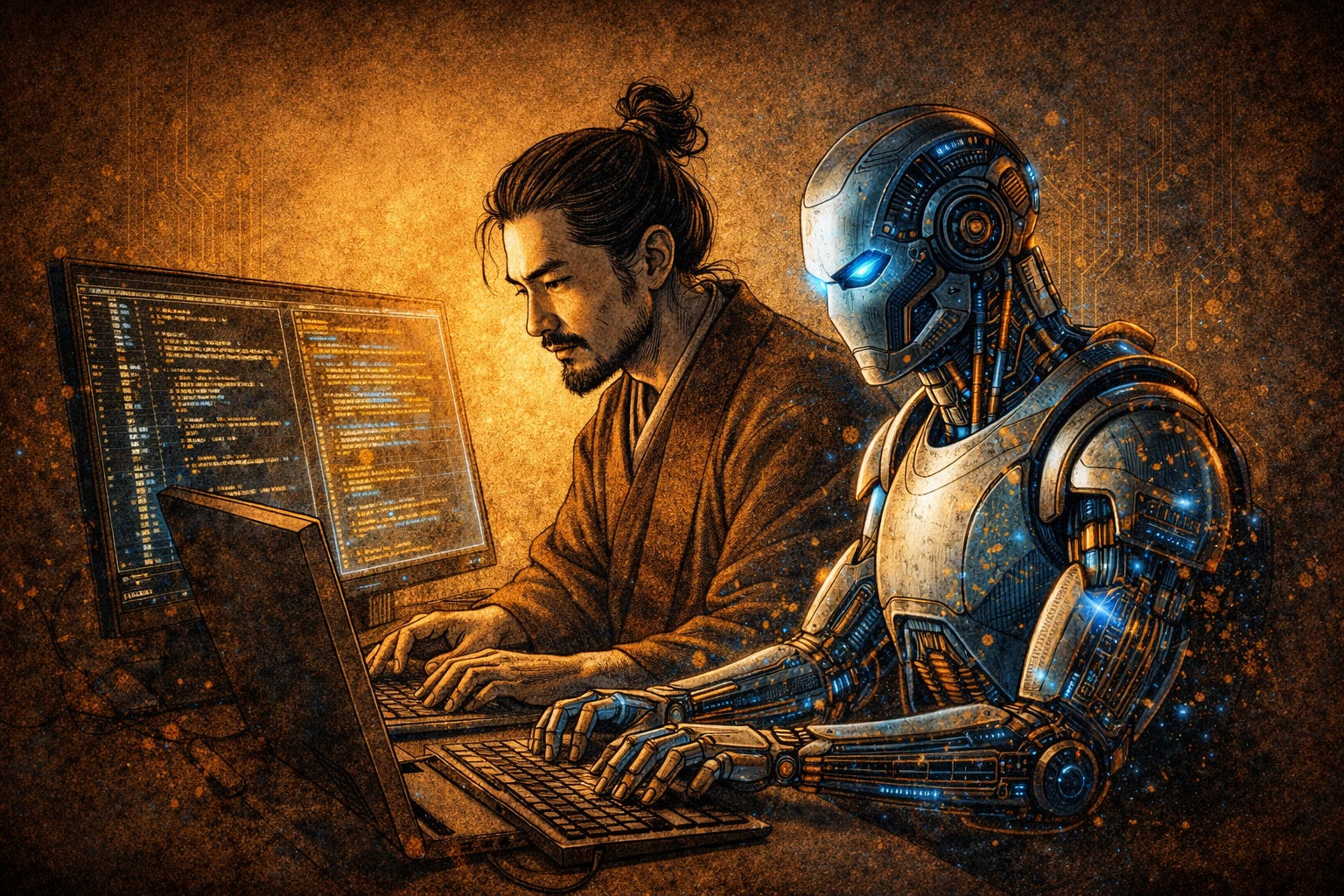
If I’d Had Claude Code Twenty Years Ago, I’d Probably Be a Billionaire Today
I’ll say it plainly, even if it sounds arrogant: if I’d had Claude Code twenty years ago, I’d probably be a very rich man today. Not because my ideas were better than anyone else’s. Not because I had a superior read on the market. But because the bottleneck that strangled my execution for a quarter of a century would have vanished. Every MVP that waited six months for a dev to free up would have shipped in two weeks or less. Every iteration that stalled because the senior programmer left for another company — or because it was a holiday, Easter week, New Year’s, Columbus Day, Secretary’s Day, whatever — would have kept moving without friction. Every pivot we didn’t make because “we’d already invested too much in this architecture” would have happened at the speed of a conversation.
The cost wasn’t only economic — it was stress and existential dread. How many ideas died on the whiteboard or in the Excel sheet, how many projects stayed stuck at the wireframe or the mockup, how many pivots never happened because technical debt and human dependence made every change cost too much. Startups don’t die from a lack of ideas. They die from the distance between the idea and its execution. For twenty-five years, that distance, for me, was called developers. Today, that distance has shrunk to zero.
What really changed is an unprecedented cultural rupture — not just a productivity gain, as so many like to pretend.
It’s from this reflection that I want to ask you to climb one more step with me. What’s happening with Claude Code is not a productivity increase. That language is too small, too corporate, too lukewarm to describe what’s actually going on. A productivity increase is when Excel replaced the calculator. Claude Code is something else — it’s a full paradigm shift in the division of labor.
Let’s go back to fundamentals, as we so often invite you to do at FUTOPIX. What is programming, in its most minimal form? Programming is translating human intention into instructions a machine can execute. For roughly seventy years, that translation required a specialized intermediary — the programmer — who mastered a cryptic syntax and had become the gatekeeper between whoever had the idea and the idea built.
That figure, that bottleneck, was born around 1950 with the first programming languages and consolidated into a professional caste across the entire second half of the 20th century. When Bill Gates and Paul Allen founded Microsoft, when Jobs and Wozniak founded Apple, when Zuckerberg founded Facebook, they did it because they themselves were part of that caste. Those of us who couldn’t code depended on those who could. That dependence organized the entire digital economy.
What Claude Code is doing — and this has to be said with the clarity of a scalpel — is dissolving the programmer caste’s monopoly over the idea-to-code translation. It’s not just replacing it; it’s dissolving it, diluting it, turning it into an optional matter.
Let’s think about this with historical perspective. When Gutenberg’s printing press appeared in 1450, it didn’t make the scribe’s work faster — it ended scribework as a monopoly on the production of knowledge. When the sewing machine appeared in the 19th century, it didn’t improve the seamstress’s productivity — it transformed the relationship between the individual and the making of their own clothing. When the automobile was democratized, it didn’t make coachmen more efficient — it replaced them as an economic category.
Claude Code is to programming what the printing press was to scribework. It isn’t a tool that helps the programmer; it’s a technology that reorders the entire relationship between the one who dreams up a product and the product built.

The Samurai Metaphor: The Sword and the Companion
In my personal library I keep, with special fondness, a book I reread every so often: The Book of Five Rings by Miyamoto Musashi, Japan’s most legendary samurai, written in 1645 when he was sixty years old and had won more than sixty duels without losing a single one. In that book, Musashi teaches a technique he named Ni Ten Ichi Ryu: one school, two swords.
The idea is radical. While every samurai of his era fought with a long sword held in both hands, Musashi wielded a long sword in one hand and a short sword — called the companion — in the other. It wasn’t for show. It was a strategic philosophy. With two swords, one man is worth ten. With two swords, you don’t die with a weapon still sheathed.
Let me say it directly: Claude Code is the modern entrepreneur’s companion sword. You’re still the long sword — the one that sets the direction, that carries the intention, that holds the sense of the business, that knows the customer, that understands the market, that has lived the sleepless nights wondering whether the revenue model holds up. That remains your main weapon, and nobody can replace it for you. But now you have a second sword, a companion sword, that moves with superhuman agility on the very terrain where you used to freeze: the translation of your vision into executable code.
Musashi writes something that today resonates with almost unsettling precision: “From one thing, know ten thousand things. When you attain the Way of Strategy, there will not be one thing you cannot see.” With the two swords, the solo founder sees what used to require a team of twenty. The power asymmetry that once favored huge corporations with infinite budgets is evening out. The individual with vision and Claude Code has, today, more execution capacity than many companies that were billing a hundred million dollars ten years ago.
You to You Squared
Another book that has kept me company for years is The Quantum Leap Strategy by Price Pritchett. Its thesis is simple and brutal: quantum leaps don’t happen by working harder within the same system; they happen when you change the system. It’s not more of the same, faster — it’s a radically different way of operating.
Pritchett puts it this way: you to you squared. It’s not that you improve by 20%, 30%, 50%. It’s that you multiply your capacity by an exponential factor because the new system removes a constraint you used to take as inevitable.
This — exactly this — is what Claude Code offers the contemporary entrepreneur. It doesn’t make you program faster. It makes you program things you couldn’t program at all before. It pulls you out of the category of “entrepreneur who depends on developers” and moves you into the category of “entrepreneur sovereign over their own stack.”
When Pritchett says “act as if you had complete faith; go for the quantum leap with everything you’ve got,” you could read it as cheap motivational self-help. Today, I read it as a technical description of what’s possible. If someone had told me five years ago that I, at my age, with no team of developers, could design, prototype, and launch functional applications working alone with an AI as my companion, I’d have said they were on drugs. Today I do it on Saturday mornings, between one cup of coffee and the next.
The Most Solid Source of Independence
Let me allow myself a sentence I know will sound excessive, but which I write with the conviction of someone who has spent twenty-five years in this industry: Claude Code is the most powerful source of individual independence that has appeared in my professional life.
When I say independence, I don’t mean it in a vague or romantic sense. I mean something very concrete, almost geometric: Independence from other people’s schedules. I no longer have to wait for a developer to “free up” to move my idea forward. My idea moves forward when I have time to think it.
Independence from startup capital. Many of my earlier projects died because the cost of building the MVP was prohibitive before I could validate the hypothesis. Today the cost of an MVP is measured in days of personal work, not in investment rounds.
Independence from the geography of talent. I no longer need to be in Medellín, Bogotá, Mexico City, Miami, or San Francisco to have access to a world-class technical team. My technical team fits inside my laptop.
Independence from internal politics. No need to negotiate with the CTO, no need to fight with the lead developer, no need to convince the team that the feature is a priority. If you decide it’s a priority, it’s a priority.
Independence from the rhythm of the venture-capital cycle. I don’t have to raise a round to validate an idea. I validate it myself, alone, with my companion sword.
The deepest of them all: independence from mediation. My idea no longer has to pass through another person’s interpretive filter. I think, I speak, and the code appears. The gap between signifier and signified — the same gap I’ve described in earlier FUTOPIX issues as the very heart of anthropology — closes in the direct experience of the founder-builder.
This is the kind of independence that historically existed only for the artisans who built their own objects by hand in the workshop at home. What Claude Code offers is the digital version of that craftsmanship, but with industrial capacity. It’s the return of the maker, the builder, the tinkerer, raised to the tenth power.

The Rebirth of the Founder-Builder
I want to propose a cultural thesis, because FUTOPIX wouldn’t be FUTOPIX if we didn’t look at the phenomenon through an anthropologist’s eyes.
For seventy years, the digital economy was organized around the separation between the one who thinks up the product and the one who builds it. The product manager dreamed, the developer executed. The founder sold the vision, the CTO made it real. The designer drew the screen, the engineer implemented it. This division of labor worked, but it also created enormous distortions: loss of fidelity between intention and execution, cultural friction between teams, cumulative delays, and a hierarchical dependence where real power ended up residing with whoever controlled the code.
What we’re living through now, with Claude Code and tools of the same family, is the return of the founder-builder — that figure who existed in the early days of personal computing, when Steve Wozniak soldered his own boards and Bill Gates wrote BASIC at night. That figure disappeared as projects grew too big and complex for one person. Now it’s coming back, but with a superpower Wozniak didn’t have: an AI as a constant companion that amplifies technical capacity without diluting business vision.
The founder-builder of 2026 is not the lone programmer of the ‘80s. It’s a new hybrid: someone who thinks about the business, converses with the AI, validates with the user, and closes the loop without ever leaving their own head. The feedback cycles that used to take weeks or months now take hours. The speed of learning shoots up. And the speed of learning — let’s never forget it — is the only truly sustainable competitive advantage in an exponential world.
What This Means for Those Who Read Me
If you’re reading this FUTOPIX and you’re an entrepreneur, an executive, a student, a curious mind, a dissident from corporate tedium, or any other member of this tribe of wide-awake dreamers, I want to leave you three ideas to carry with you:
First: if you have an idea you’ve been carrying for years because you couldn’t figure out how to build it, this is the moment. The door has just opened. The technical barriers that paralyzed you for a decade are no longer there. What used to require landing a co-founder CTO now requires learning to converse strategically with an AI. That can be learned. It isn’t trivial, but it can be learned.
Second: your advantage is no longer the code — it’s the question. In a world where anyone can produce code with AI, the difference will be made by whoever knows how to frame the right questions, whoever has the sharpest business instinct, whoever understands the customer most deeply, whoever has aesthetic and ethical judgment about what’s worth building. The human fundamentals — empathy, judgment, vision, taste — are more valuable than ever, precisely because technical execution is becoming a commodity.
Third: the window won’t stay open forever. When every entrepreneur in the world has access to these tools, the competitive advantage will have been absorbed by the market. Whoever adopts them now, whoever masters them in the next twenty-four months, will operate with a brutal time asymmetry over those who adopt them in 2028 or 2029. In moments of technological transition, the first twenty-four months are worth the next ten years. Ask the people who bought domains in 1995, who joined Facebook in 2008, who mined Bitcoin in 2011.

A Final Confession
I’m entering the maturity of life. I’ve built, closed, and sold companies. I’ve made money and lost it. I’ve hired dozens of developers and suffered the departure of just as many. I’ve lived through every stage of the entrepreneurial cycle, from the euphoria of launch to the silence of failure. And yet, never in my professional life have I felt as free to build as I feel today.
It’s not nostalgia for the nineties. It’s not teenage excitement over a new technology. It’s the calm certainty that, for the first time in almost thirty years, the distance between my imagination and my execution depends almost entirely on my own will.
This is what Claude Code means to me. I don’t see it as a tool, nor as an assistant. I see it the way you see a traveling companion who gives you back something you thought you’d lost forever: the ability to build alone, at my own pace, by my own rules, without asking permission, without waiting for anyone.
The long sword is still mine. The companion sword has just arrived — and with both in hand, as Musashi taught, one man is worth ten thousand.
If this FUTOPIX stirred something in you — a sleeping idea, an old rebellion, a project shut away in a drawer — I invite you to take it out and put it on the table. The technology you were waiting for to build it has already arrived.
The rest is up to you.
It’s time to reclaim the sovereignty to build.
It’s time to think big without begging for execution.
It’s time for the founder-builder of the 21st century.

DISCLAIMER
This document is for informational, educational, and futurist-analysis purposes only. It does not constitute financial advice, an investment solicitation, or a recommendation to buy, sell, or participate in any instrument, company, project, or asset.
If anyone uses the content of this material to solicit money, investments, or economic participation, treat it immediately as a possible scam.
Always protect your personal and financial information.